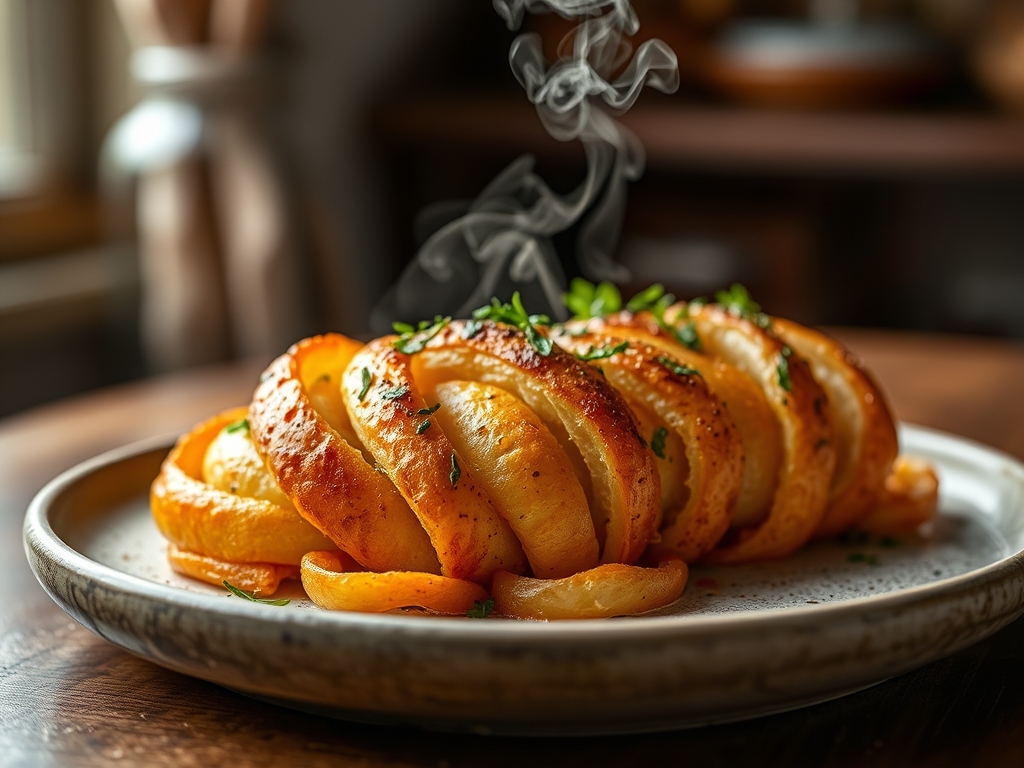
Listen closely because your standard loaf of bread just became obsolete. We are moving beyond the pedestrian world of simple sandwich slices and entering the high-stakes arena of the Spiralized Brioche. This is not just a recipe; it is a structural engineering project involving high-fat hydration and the strategic manipulation of gluten networks. Imagine a crumb so tender it borders on the ethereal, yet structured enough to hold a coiled architecture that reveals a mesmerizing pattern of golden, buttery layers upon the first slice. The scent alone is a weapon of mass distraction. It is the aroma of Maillard reactions dancing with high-quality cultured butter and the faint, sweet perfume of active yeast. When you pull this masterpiece from the oven, the crust should shatter with a delicate crunch before yielding to a center that is soft, pillowy, and intensely rich. We are here to audit your current baking protocols and upgrade your kitchen infrastructure to handle this level of enriched dough excellence.
THE DATA MATRIX
| Metric | Specification |
|---|---|
| Prep Time | 45 Minutes (Active) |
| Execution Time | 18 Hours (Includes Overnight Cold Fermentation) |
| Yield | 2 Large Loaves |
| Complexity (1-10) | 8.5 |
| Estimated Cost per Serving | $1.25 |
THE GATHERS
Ingredient Protocol:
- 500g / 4 cups Bread Flour (Minimum 12.5% Protein)
- 10g / 2 tsp Fine Sea Salt
- 50g / 1/4 cup Superfine Sugar
- 10g / 1 tbsp Instant Yeast
- 6 Large Eggs (Approximately 300g / 1.25 cups)
- 250g / 1 cup Unsalted High-Fat European Butter (Cold and Cubed)
- 60ml / 1/4 cup Whole Milk (Lukewarm)
- 1 Large Egg + 15ml / 1 tbsp Water (For Egg Wash)
Section A: Ingredient Quality Audit:
If your flour has a low protein content, your Spiralized Brioche will lack the structural integrity required to maintain its coil; it will collapse into a sad, dense mass. Fix this by adding 15g of vital wheat gluten to your dry mix. If your butter is "grocery store grade" with high water content, the emulsion will break during the mixing phase. This results in a greasy dough that refuses to aerate. Always source butter with at least 82 percent butterfat. If your yeast is sluggish, do not proceed. Perform a viability test in the warm milk with a pinch of sugar; if it does not foam within five minutes, discard it. Your infrastructure is only as strong as its weakest biological component.
THE MASTERCLASS
Step 1: The Initial Hydration
Combine the flour, salt, sugar, and yeast in the bowl of a heavy-duty stand mixer. Add the eggs and milk. Use the dough hook attachment on low speed to incorporate the ingredients until no dry flour remains.
Pro Tip: Use a digital scale for every measurement. Volume is the enemy of consistency in enriched doughs. Precise hydration ensures the gluten can begin to organize without being inhibited by excess fat too early.
Step 2: The Gluten Foundation
Increase the mixer speed to medium. Knead the dough for 8 to 10 minutes until it pulls away from the sides of the bowl and passes the "windowpane test." The dough should be smooth and elastic.
Pro Tip: The science here is about building a protein scaffold. If you add butter before the gluten is developed, the fat molecules will coat the proteins and prevent them from bonding. Use a bench scraper to clear the sides of the bowl periodically.
Step 3: The Butter Emulsification
With the mixer running on low, add the cold, cubed butter one piece at a time. Wait until each piece is fully incorporated before adding the next. This process should take about 15 minutes.
Pro Tip: This is a mechanical emulsion. You are forcing fat into a water-based dough. If the dough becomes too warm and the butter begins to render, stop immediately and refrigerate the bowl for 20 minutes before continuing.
Step 4: The Cold Fermentation
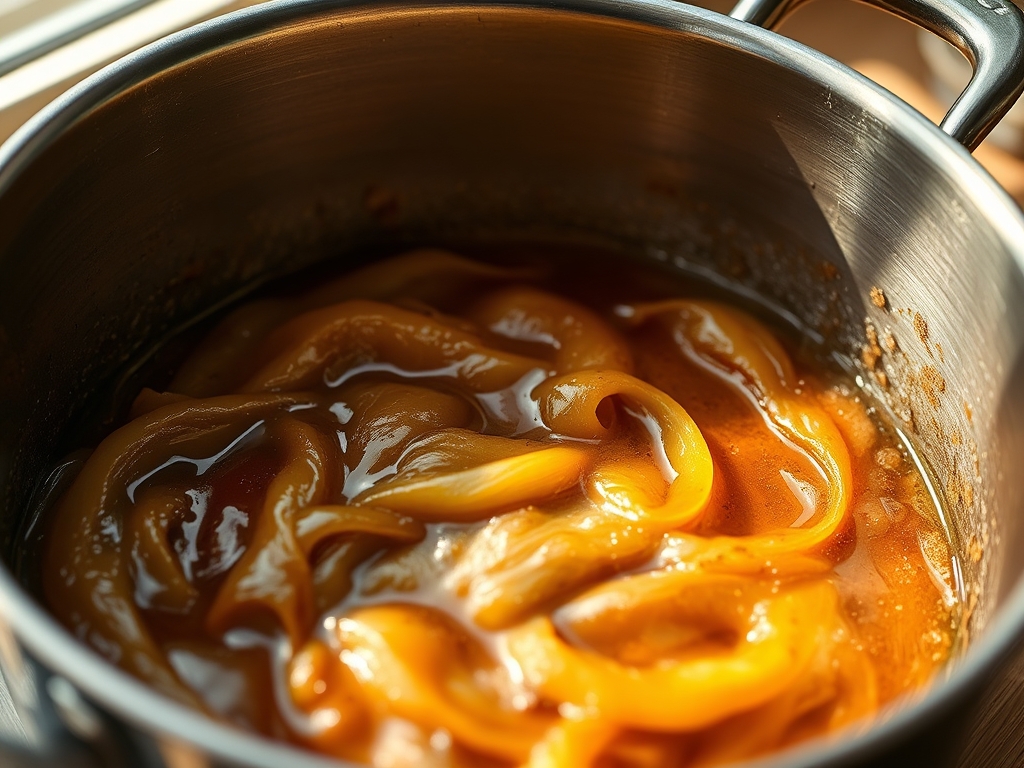
Transfer the viscous dough to a lightly greased container. Cover tightly and refrigerate for at least 12 hours, or up to 24 hours.
Pro Tip: Cold fermentation slows down yeast activity while allowing enzymes to break down starches into complex sugars. This develops flavor and makes the high-fat dough easier to handle during the spiralization phase.
Step 5: Architecture and Spiralization
Divide the chilled dough into equal portions. Roll each into a long rectangle. Roll the rectangle into a tight cylinder, then cut the cylinder lengthwise to expose the internal layers. Twist these two strands together and coil them into a greased loaf pan.
Pro Tip: Use a sharp lame or specialized baker's blade to ensure clean cuts. Ragged edges will fuse together during the final proof, destroying the visual definition of the spiral.
Step 6: The Final Proof and Bake
Let the loaves rise at room temperature until doubled in size. Brush with egg wash and bake at 175C / 350F for 35 to 40 minutes until the internal temperature reaches 88C / 190F.
Pro Tip: Use an instant-read probe thermometer to verify doneness. Enriched doughs brown quickly due to the sugar and butter; if the exterior is dark but the interior is under 88C, the loaf will collapse as it cools.
Section B: Prep & Timing Fault-Lines:
The most common human error is impatience during the butter incorporation. If you dump the butter in all at once, the dough will slip around the bowl and never reach a cohesive state. Another fault-line is the proofing temperature. If the room is too hot (above 27C / 80F), the butter within the layers will melt before the bread sets, leading to a "leaky" loaf and a greasy bottom crust. Maintain a controlled environment to preserve the molecular structure.
THE VISUAL SPECTRUM
Section C: Thermal & Visual Troubleshooting:
Look at the Masterclass photo. Notice the high-contrast definition between the deep mahogany ridges and the pale gold valleys of the spiral. If your loaf is a uniform, dull brown, you likely over-applied the egg wash or baked at too high a temperature. If the spiral has "blown out" or lost its shape, the dough was likely under-proofed, causing an explosive oven spring that tore the delicate coils. If the crumb appears yellow and tight rather than lacy and open, your butter was likely too warm during the mixing phase, ruining the infuse of air into the fat-protein matrix.
THE DEEP DIVE
Macro Nutrition Profile:
This is a high-performance luxury fuel. One slice contains approximately 280 calories, 14g of fat, 32g of carbohydrates, and 6g of protein. It is designed for flavor density, not caloric restriction.
Dietary Swaps:
- Vegan: Replace eggs with a commercial egg replacer and use a high-quality vegan block butter (not margarine). Note that the protein structure will be weaker.
- Keto/GF: Brioche relies heavily on the gluten-fat interaction. While almond flour and xantham gum can approximate the texture, the spiralized structure is extremely difficult to achieve without traditional wheat proteins.
Meal Prep & Reheating Science:
To maintain the molecular structure, do not refrigerate baked brioche; this accelerates starch retrogradation (staling). Freeze slices in airtight bags. To reheat, use a toaster oven to re-crystallize the fats and crisp the exterior, returning the loaf to its original viscous interior state.
THE KITCHEN TABLE
Why is my brioche dough so sticky?
High hydration and fat content make it naturally tacky. Do not add more flour. Use cold temperatures and a bench scraper to manage the dough. The stickiness is a sign of a rich, tender crumb in your future.
Can I skip the overnight chill?
Technically yes, but your Spiralized Brioche will be a nightmare to shape. The cold firms the butter, turning the dough into a workable "clay." Without it, the coils will lack the necessary definition and structural integrity.
My loaf is dark but raw inside. Help!
The sugars and proteins in brioche cause rapid browning via the Maillard reaction. If it browns too fast, tent the loaf with foil and ensure you are using an oven thermometer to verify your appliance's actual internal temperature.
How do I get that professional shine?
The secret is a double-filtered egg wash. Whisk one egg with a pinch of salt and a splash of water, then pass it through a fine-mesh sieve to remove the chalazae. This ensures a streak-free, glass-like finish.