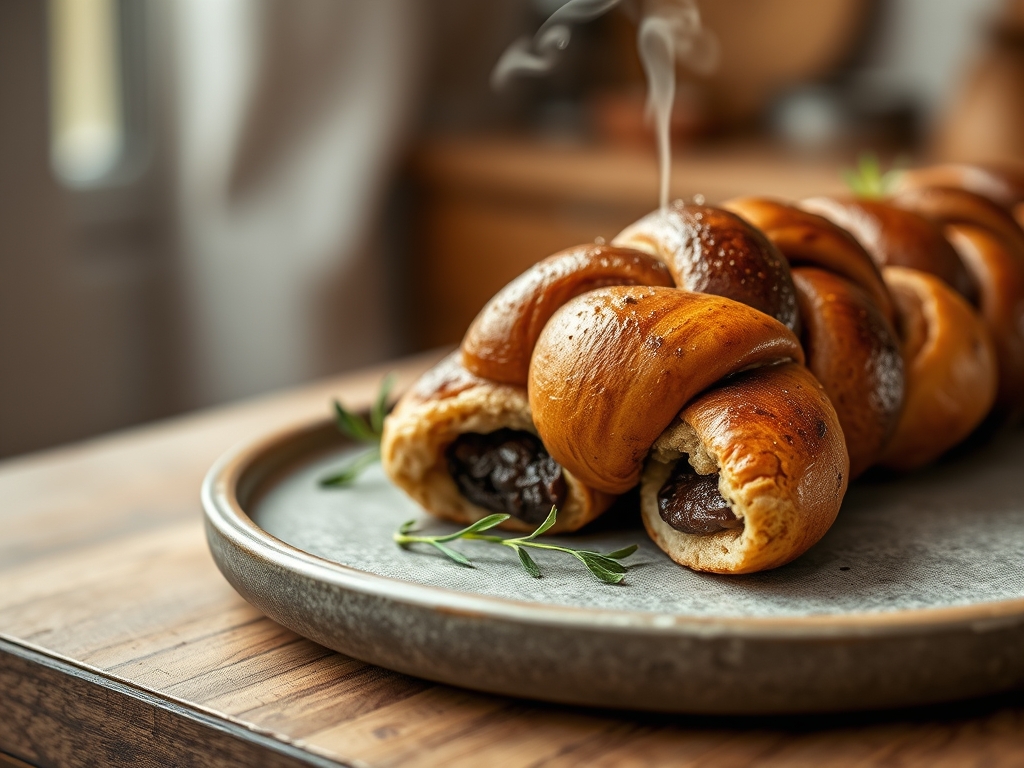
The kitchen is a battlefield of viscosity and tension. We are not just baking; we are engineering a structural masterpiece of fermented dough and lipid-heavy cocoa solids. The Braided Nutella Bread is the ultimate test of your culinary infrastructure. Imagine a crumb so tender it defies gravity, interlaced with a dark, shimmering river of hazelnut cream that has been thermally stabilized within a golden, oven-sprung crust. This is the intersection of yeast-driven aeration and the high-fat luxury of a spreadable ganache. When that heat hits the oven floor, the water molecules in the dough vaporize, pushing against the gluten network to create a massive volume increase while the sugars in the hazelnut spread undergo a slow, controlled caramelization. We are looking for a sensory overload: the smell of toasted nuts, the tactile resistance of a perfectly proofed brioche, and the visual drama of a complex weave. If you are tired of flaccid, uninspired loaves, stand up. It is time to audit your technique and build something legendary.
THE DATA MATRIX
| Metric | Specification |
|---|---|
| Prep Time | 30 Minutes |
| Execution Time | 2.5 Hours (including proofing) |
| Yield | 1 Large Braided Loaf (10-12 slices) |
| Complexity (1-10) | 7 (Requires precision tensioning) |
| Estimated Cost per Serving | $0.85 USD |
THE GATHERS
Ingredient Protocol:
- 500g / 4 cups All-Purpose Flour (High protein preferred)
- 250ml / 1 cup Whole Milk (Warm, 110 degrees F)
- 7g / 2.25 tsp Active Dry Yeast
- 50g / 0.25 cup Granulated Sugar
- 5g / 1 tsp Fine Sea Salt
- 1 Large Egg (Room temperature)
- 75g / 5.25 tbsp Unsalted Butter (Softened)
- 300g / 1 cup Nutella or Hazelnut Cocoa Spread
- 1 Egg + 15ml Water (For the egg wash)
Section A: Ingredient Quality Audit:
If your yeast fails to aerate the milk within five minutes, your biological leavening is dead. Discard and restart with fresh stock; never attempt to "fix" dead yeast with more sugar. If your flour has a low protein content, the dough will lack the tensile strength to hold the heavy hazelnut lipids, resulting in a collapsed structure. Use a digital scale to ensure the flour-to-liquid ratio is exact. Sub-par cocoa spreads often contain excess palm oil which can render out during baking, causing a greasy mess. If your spread is too runny, refrigerate it for twenty minutes before application to stabilize the viscous layer.
THE MASTERCLASS
1. The Hydration Phase
Combine the warm milk, sugar, and yeast in the bowl of a stand mixer. Let it sit until a foamy pellicle forms on the surface. Add the egg and half the flour, using the dough hook to incorporate.
Pro Tip: Use an infrared thermometer to verify the milk temperature. If it exceeds 120 degrees F, you will scald the yeast and destroy the enzymatic activity required for a proper rise.
2. The Lipid Integration
Gradually add the remaining flour and salt. Once a shaggy mass forms, incorporate the softened butter one tablespoon at a time. Knead on medium speed for 8 to 10 minutes until the dough is smooth, elastic, and clears the sides of the bowl.
Pro Tip: This is the "Windowpane Test" phase. Stretch a small piece of dough; if it becomes translucent without tearing, the gluten infrastructure is complete. A bench scraper is essential here to manage the dough without adding excess flour.
3. The Primary Fermentation
Place the dough in a lightly oiled bowl and cover with a damp cloth. Allow it to rise in a warm, draft-free environment until it has doubled in volume, approximately 60 to 90 minutes.
Pro Tip: Do not rush this. The yeast needs time to infuse the dough with carbon dioxide and organic acids that develop flavor. A proofing box or a turned-off oven with a bowl of hot water creates the ideal micro-climate.
4. The Laminate Application
Punch down the dough to degas. On a floured surface, roll it into a large rectangle (approximately 12×18 inches). Spread the Nutella in an even, viscous layer across the entire surface, leaving a small margin at the edges.
Pro Tip: Use an offset spatula for the spread. If the Nutella is too stiff, place the jar in a saucier of warm water for a few minutes to improve its flow characteristics without melting it.
5. The Structural Braid
Roll the dough tightly into a long log starting from the wide edge. Using a sharp knife or a bench scraper, slice the log in half lengthwise, exposing the dark internal layers. Twist the two strands over each other, keeping the cut sides facing upward to showcase the contrast.
Pro Tip: Maintain high tension during the twist. If the braid is too loose, the loaf will expand outward rather than upward, losing the iconic "Braided Nutella Bread" aesthetic seen in the reference photo.
6. The Final Proof and Thermal Execution
Transfer the braid to a parchment-lined baking sheet. Let it rise for another 30 minutes. Brush with egg wash and bake at 350 degrees F (175 C) for 25 to 30 minutes until the internal temperature reaches 190 degrees F.
Pro Tip: The egg wash creates a Maillard reaction that results in a piquant, mahogany crust. Use a digital probe thermometer to ensure the center is fully baked; the dense chocolate core can often hide undercooked dough.
Section B: Prep & Timing Fault-Lines:
The most common failure is "The Cold Fat Stall." If your butter or eggs are cold, they will shock the yeast and extend your proofing time by hours. Always temper your ingredients to room temperature. If the dough feels too sticky to braid, refrigerate it for 15 minutes to firm up the fats. This "Cold-Set Technique" allows for cleaner cuts and more defined visual layering without compromising the final crumb texture.
THE VISUAL SPECTRUM
Section C: Thermal & Visual Troubleshooting:
Look at the reference photo: notice the high-contrast definition between the golden dough and the dark chocolate ribbons. If your bread looks muddy, you likely overworked the dough during the braiding phase, smearing the layers together. If the top is browning too fast while the center remains doughy, tent the loaf with aluminum foil. Dull color indicates a skipped or thin egg wash; ensure a thorough coating for that professional sheen. If the loaf split at the bottom, your shaping tension was uneven, causing the steam to escape through the weakest structural point.
THE DEEP DIVE
Macro Nutrition Profile:
A single serving typically contains 320 calories, 14g of fat, 42g of carbohydrates, and 6g of protein. This is a high-energy density food designed for indulgence.
Dietary Swaps:
- Vegan: Substitute milk with oat milk, butter with a high-quality vegan block, and use a dairy-free hazelnut spread. Replace the egg wash with a maple syrup and soy milk glaze.
- Keto/GF: This specific infrastructure relies heavily on gluten. For a GF version, use a premium 1-to-1 flour blend with added xantham gum, though the elasticity will be significantly reduced.
Meal Prep & Reheating Science:
To maintain the molecular structure, store the bread in an airtight container at room temperature for up to three days. To reheat, avoid the microwave as it turns the starches rubbery. Use a toaster oven at 300 degrees F for five minutes to re-crisp the crust and soften the internal lipid layer.
THE KITCHEN TABLE
Why is my dough not rising?
Your liquid was likely too hot, killing the yeast, or too cold, keeping it dormant. Check your expiration dates and use a thermometer to ensure a 110 degree F environment for activation.
Can I use a different filling?
Absolutely. While Braided Nutella Bread is the gold standard, you can swap for cinnamon sugar, almond paste, or savory pesto. Just ensure the filling has enough viscosity to stay put during the braiding process.
How do I get those perfect clean layers?
Chill the rolled log in the freezer for 10 minutes before slicing it open. This firms up the hazelnut spread, preventing it from bleeding into the dough when you use your bench scraper or knife.
Why is the bottom of my bread burnt?
This is a heat distribution issue. Use a heavy-duty rimmed baking sheet or a silicone baking mat to insulate the dough from the direct, aggressive heat of the lower oven rack.