The scent of rendered pork fat hitting a convection current is not just a smell; it is a siren song for the culinary elite. We are moving beyond the amateur hour of limp pastry and gray meat. Today, we conduct a rigorous structural audit of the helical pig in a blanket, a dish that demands architectural integrity and thermal precision. These Coiled Sausage Rolls are the pinnacle of protein encapsulation. Imagine a high-tensile puff pastry, laminated to perfection, winding tightly around a seasoned force-pique of heritage pork. As the oven temperature climbs, the Maillard reaction transforms the exterior into a shatter-crisp mahogany shell while the interior remains a succulent, emulsified core. This is not a snack; it is a geometric triumph of fat, flour, and fire. We are looking for that specific tactile snap when the teeth breach the laminated layers, followed by the release of piquant spices and savory juices. If your current appetizer game lacks structural soundess, prepare for a total system upgrade. We are building flavor from the molecular level up.
THE DATA MATRIX
| Metric | Specification |
|---|---|
| Prep Time | 45 Minutes |
| Execution Time | 25 Minutes |
| Yield | 12 Units |
| Complexity (1-10) | 7 |
| Estimated Cost per Serving | $1.45 |
THE GATHERS
Ingredient Protocol:
- 500g / 1.1 lbs High-Quality Pork Sausage Meat (80/20 lean-to-fat ratio)
- 1 sheet / 320g Pre-rolled All-Butter Puff Pastry (Chilled)
- 1 Large Egg / 50ml (For the protein-wash)
- 15ml / 1 tbsp Whole Milk
- 5g / 1 tsp Smoked Paprika
- 2g / 0.5 tsp Ground Fennel Seeds
- 30g / 2 tbsp Toasted Sesame Seeds or Nigella Seeds
- 5g / 1 tsp Flaky Sea Salt
Section A: Ingredient Quality Audit:
The primary failure point in Coiled Sausage Rolls is lipid leakage. If your sausage meat is too lean, the result is a desiccated husk; if it is too fatty, the pastry will become a soggy, translucent mess. To fix a low-quality, "wet" sausage mix, incorporate 10g of fine panko breadcrumbs to act as a moisture sink. If your puff pastry feels tacky or limp at room temperature, the butter has begun to melt, compromising the lamination. Immediate remediation requires a 15-minute "cold soak" in the freezer to stabilize the fat solids. Always audit your spices for aromatic potency. If your fennel seeds do not emit a sharp, licorice-like scent upon crushing, they are inert and must be toasted in a dry saucier to reactivate their volatile oils.
THE MASTERCLASS
Step-by-Step Execution:
1. The Force-Pique Calibration
Empty your sausage meat into a chilled stainless steel mixing bowl. Use a digital scale to measure out your paprika and fennel. Work the spices into the meat using a cold spatula to prevent the heat from your hands from melting the fat. You are looking for a tacky, emulsified texture where the spices are evenly distributed throughout the protein matrix.
Pro Tip: Keeping the meat near 4 degrees Celsius ensures the fat remains suspended in the protein. This prevents the "greasy sleeve" effect where fat separates during the bake and ruins the pastry crispness.
2. Geometric Pastry Preparation
Unroll your chilled puff pastry onto a clean work surface. Use a bench scraper or a sharp pizza wheel to slice the pastry into long, even strips approximately 2cm wide. Precision is non-negotiable here. If the strips are uneven, the helical wrap will fail, leading to exposed meat and uneven thermal distribution.
Pro Tip: Use a metal ruler to guide your cuts. Straight lines allow for a tighter "over-under" wrap, which creates more surface area for the Maillard reaction to occur on the pastry edges.
3. The Helical Encapsulation
Take a 40g portion of meat and roll it into a uniform cylinder. Starting at one end, wind the pastry strip around the meat in a spiral pattern, overlapping the edges slightly. This creates a reinforced structural cage that traps steam inside, poaching the meat while the exterior fries in its own rendered fat.
Pro Tip: This technique utilizes the "chimney effect." The small gaps in the spiral allow just enough steam to escape so the pastry does not become viscous, while the overlap ensures the roll maintains its shape.
4. The Protein-Wash Application
Whisk the egg and milk in a small ramekin until perfectly homogenous. Use a natural-bristle pastry brush to apply a thin, even layer over the exposed pastry. Do not let the wash pool at the base. Sprinkle immediately with seeds and flaky salt to ensure adhesion.
Pro Tip: The lactose in the milk and the proteins in the egg yolk work in tandem. The milk sugars caramelize quickly for color, while the egg proteins create a high-gloss, hydrophobic barrier that keeps the pastry "snap" intact.
5. Thermal Execution
Slide the tray into a preheated oven at 200 degrees Celsius (400 degrees Fahrenheit). Bake for 22 to 25 minutes. You are looking for an internal meat temperature of 74 degrees Celsius (165 degrees Fahrenheit) and a deep, golden-brown pastry hue.
Pro Tip: Use a wire cooling rack immediately after removal. If the rolls sit on a flat baking sheet, the bottom layers will reabsorb the steam and lose their structural integrity.
Section B: Prep & Timing Fault-Lines:
Human error often manifests in the "resting phase." If you attempt to slice or handle the rolls the second they exit the oven, the internal juices remain highly mobile and will leak out, leaving the meat dry. Allow a 5-minute rest period for the protein fibers to relax and reabsorb the moisture. Furthermore, if your oven has "hot spots," rotate the tray 180 degrees at the 12-minute mark. Failure to do so results in a gradient of doneness that is unacceptable in a professional audit.
THE VISUAL SPECTRUM
Section C: Thermal & Visual Troubleshooting:
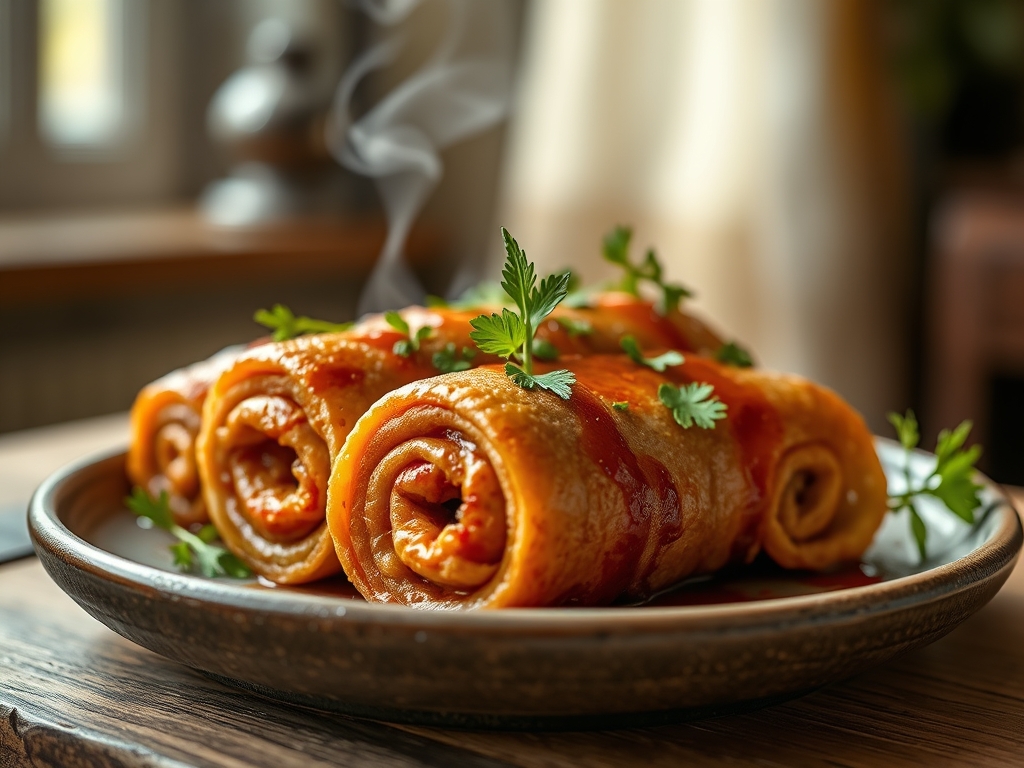
Referencing the Masterclass photo, the ideal specimen exhibits a "shingled" appearance where each pastry wrap is distinct. If your rolls look like a solid, smooth tube, you have overlapped the pastry too much, which prevents the inner layers from cooking. If the pastry is pale and "blonde," your oven floor temperature is too low; move the rack to the bottom third of the oven to increase conductive heat. Dull, matte pastry indicates a skipped or poorly applied egg wash. For that signature "high-spec" glow, ensure the egg wash is applied twice: once before a 10-minute chill and once right before the bake. This creates a double-layered protein film that catches the light.
THE DEEP DIVE
Macro Nutrition Profile:
Each unit delivers approximately 220 calories, with 14g of fat, 18g of carbohydrates, and 9g of protein. The high fat content is essential for the "mouthfeel" but requires a sharp, acidic pairing like a Dijon mustard or a vinegar-based chutney to cleanse the palate.
Dietary Swaps:
For a Vegan audit, replace the pork with a mushroom and walnut-based mince bound with flax-egg. Use a vegan-certified puff pastry (most commercial brands use vegetable fats) and swap the egg wash for a maple-soy glaze to achieve the necessary browning. For Keto/GF, the pastry must be replaced with a fat-head dough made from mozzarella and almond flour, though the "flake" factor will be significantly reduced.
Meal Prep & Reheating Science:
To maintain molecular structure, never microwave a sausage roll. The microwave agitates water molecules, turning the crisp pastry into a rubbery mess. Instead, reheat in an air fryer or oven at 180 degrees Celsius for 6 minutes. This re-activates the fats and restores the "crunch" through secondary dehydration.
THE KITCHEN TABLE
Why is my pastry raw on the inside?
This is a "thermal lag" issue. The oven was likely too hot, browning the outside before the heat could penetrate the center. Lower the temp by 10 degrees and extend the bake time for better heat distribution.
Can I freeze these before baking?
Absolutely. Flash-freeze them on a tray before transferring to a bag. Bake directly from frozen, adding 10 minutes to the total time. This actually improves the pastry "puff" as the ice crystals create more steam pockets.
How do I stop the meat from shrinking?
Meat shrinks when it loses too much moisture. Ensure your sausage mix has enough fat and a small amount of binder like breadcrumbs or grated apple to hold the juices in place during the thermal transition.
Why did my egg wash turn black?
The sugar content in your wash was too high, or the tray was too close to the top heating element. Move the tray to the middle rack and ensure your wash is a simple egg-and-water or egg-and-milk ratio.