Listen up, because we are about to overhaul your culinary infrastructure. We are moving beyond the flat, uninspired noodles of the amateur circuit and entering the high-stakes world of wide-ribbon elasticity. Imagine a landscape of golden, undulating dough that captures sauce not just on its surface, but within its very architectural soul. This is Curly Pappardelle. We are talking about a pasta with enough structural integrity to hold up under a heavy, viscous ragu, yet enough delicate aeration to melt against the palate. This is not just dinner; it is a mechanical triumph of flour and friction. When that fork twists, the ruffles should create a hydraulic suction that pulls the piquant essence of your sauce into every crevice. If your current pasta game feels like a flat-line, it is time for a technical audit. We are here to render out the mediocrity and infuse your kitchen with professional-grade precision. Prepare for a masterclass in tension, texture, and the glorious geometry of the curl.
THE DATA MATRIX
| Metric | Specification |
|---|---|
| Prep Time | 45 Minutes |
| Execution Time | 15 Minutes |
| Yield | 4 Servings |
| Complexity | 7/10 |
| Estimated Cost per Serving | $4.50 USD |
THE GATHERS
Ingredient Protocol:
- 400g / 3.2 cups Double Zero (00) Flour (High protein content for gluten development)
- 4 Large Pasture-Raised Egg Yolks (For lipid-rich emulsification)
- 2 Large Whole Eggs (To provide structural protein)
- 10ml / 2 tsp Extra Virgin Olive Oil (To lubricate the dough matrix)
- 5g / 1 tsp Fine Sea Salt (For ionic seasoning)
- 15ml / 1 tbsp Cold Water (Only if the hydration levels fail the tactile test)
Section A: Ingredient Quality Audit:
The primary failure point in Curly Pappardelle is sub-par flour. If you use standard all-purpose flour, the gluten network will be too weak to maintain the ruffle after boiling. The fix is simple: source high-quality 00 flour with a protein content of at least 12 percent. If your eggs are pale and watery, your pasta will lack that vibrant, sunset-gold hue. To fix this, seek out eggs with deep orange yolks, which indicate a higher carotenoid content. If the dough feels gritty, your salt crystals are too large; dissolve the salt into the beaten eggs before incorporating the flour to ensure even distribution throughout the molecular structure.
THE MASTERCLASS
1. The Flour Well and Hydration Integration
Create a wide crater with your flour on a clean marble surface or a large stainless steel work table. Pour your eggs and oil into the center. Using a fork, slowly whisk the eggs while gradually drawing flour from the inner walls.
Pro Tip: Use a digital scale for your measurements rather than volume cups. Flour density varies wildly based on humidity and packing technique; weight is the only universal truth in pasta physics. This ensures the hydration ratio is perfect every time.
2. The Kneading Phase and Gluten Alignment
Once a shaggy mass forms, use a bench scraper to clear the deck and begin kneading by hand. You must stretch and fold the dough for at least ten minutes until the surface is smooth and springs back when poked.
Pro Tip: This process is about gluten alignment. By consistently folding the dough in the same direction, you are creating long, elastic protein chains that will give the Curly Pappardelle its signature "snap" when bitten.
3. The Resting Period and Protease Activity
Wrap the dough tightly in plastic wrap and let it sit at room temperature for at least 30 minutes. This is non-negotiable.
Pro Tip: Resting allows the flour to fully hydrate and the gluten network to relax. On a molecular level, enzymes called proteases are breaking down some of the protein bonds, making the dough more extensible and easier to roll without it snapping back like a rubber band.
4. Rolling and the Fluted Geometry
Roll the dough through a pasta machine until it reaches the second-to-thinnest setting. Use a fluted pastry wheel (the "curly" tool) to cut wide ribbons, roughly 2.5cm / 1 inch across.
Pro Tip: Use a saucier to prepare your sauce while the pasta air-dries for five minutes. The fluted edges increase the surface area of the noodle, allowing for maximum sauce adhesion through capillary action.
5. The Emulsified Finish
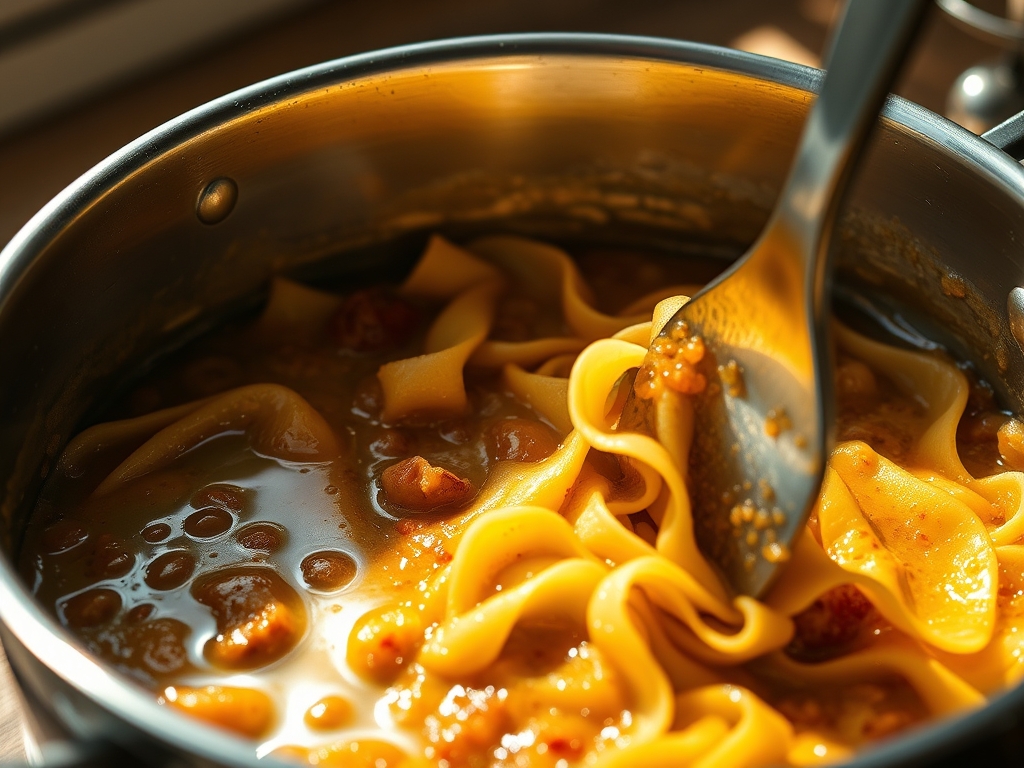
Boil the pasta in heavily salted water for 2 to 3 minutes. Transfer it directly into the sauce with a splash of starchy pasta water.
Pro Tip: The starch in the water acts as a bridge between the fats in the sauce and the water-based components. This creates a viscous, glossy emulsion that coats the curls perfectly rather than pooling at the bottom of the bowl.
Section B: Prep & Timing Fault-Lines:
The most common human error is the "Waiting Room" effect. If you roll the pasta and let it sit too long without covering it, it will oxidize and become brittle, causing the curls to snap during the boil. Conversely, if you under-knead the dough to save time, the pasta will turn to mush the moment it hits the heat. Maintain a strict timeline. If the kitchen is too hot, the fats in the egg yolks can begin to break down; keep your dough in a cool, draft-free area during the resting phase to maintain structural integrity.
THE VISUAL SPECTRUM
Section C: Thermal & Visual Troubleshooting:
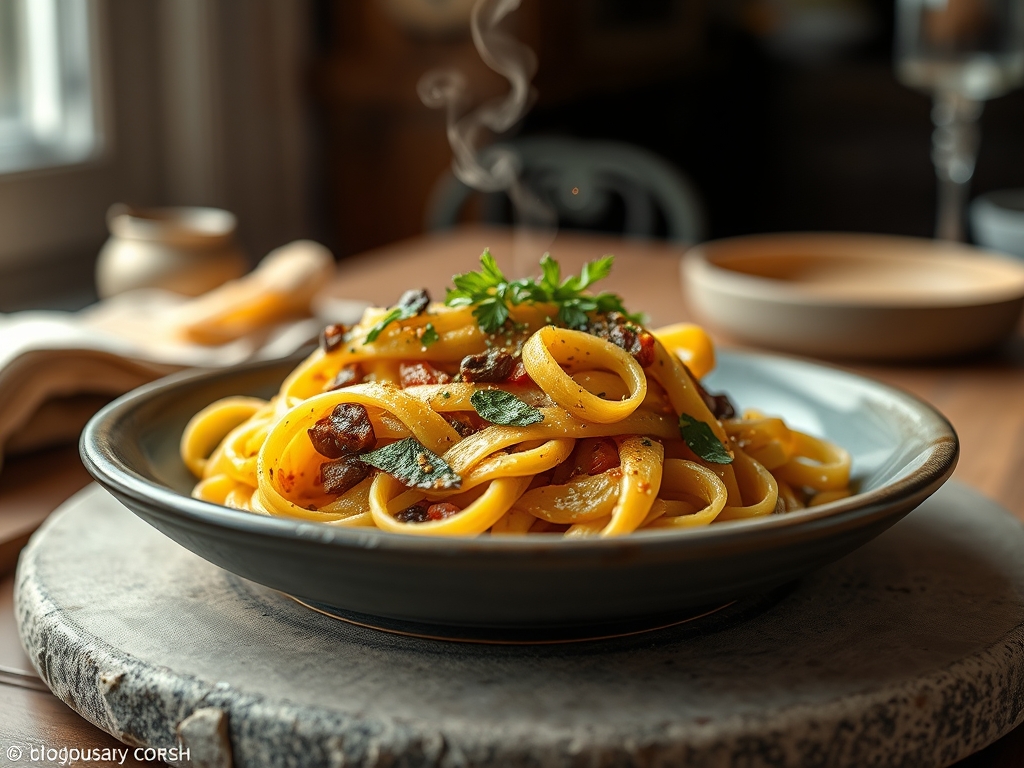
Referencing the Masterclass photo, your Curly Pappardelle should exhibit a vibrant, matte yellow finish with distinct, sharp ridges along the edges. If your pasta looks dull or grey, you have likely over-floured the dough during the rolling process, creating a dusty "skin" that prevents sauce absorption. If the edges are frayed rather than sharply fluted, your cutting wheel is dull or your dough was too wet. To achieve the high-definition look in the image, ensure the sauce is fully emulsified; if you see oil separating and pooling, the sauce is too hot or lacks enough pasta water to bind the lipids. The final plate should look "tight," with the sauce clinging to the ribbons like a silk glove.
THE DEEP DIVE
Macro Nutrition Profile:
A standard serving of this Curly Pappardelle provides approximately 350 calories, 12g of protein, 6g of fat, and 60g of complex carbohydrates. It is a high-energy fuel source designed for metabolic efficiency.
Dietary Swaps:
- Vegan: Replace the eggs with a mixture of 150ml water and 10ml olive oil, though you will lose the lipid-rich mouthfeel.
- Gluten-Free: Utilize a high-quality 1:1 GF flour blend with added xantham gum to mimic the gluten's elasticity.
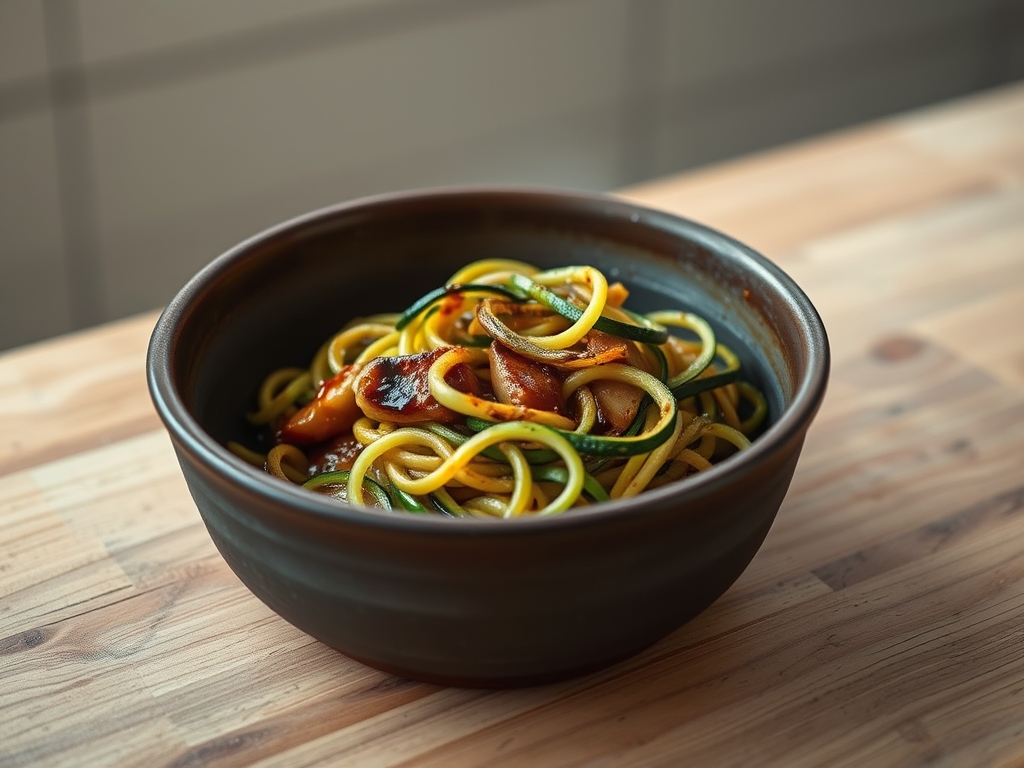
- Keto: This is a high-carb architecture; for a keto-compliant "ribbon," use shaved zucchini or daikon radish, though the structural "curl" will be absent.
Meal Prep & Reheating Science:
To maintain the molecular structure when reheating, avoid the microwave. The uneven agitation of water molecules will turn the pasta rubbery. Instead, flash-fry the ribbons in a pan with a tablespoon of water or stock. This re-hydrates the starch granules and restores the emulsion without overcooking the protein matrix.
THE KITCHEN TABLE
Why is my pasta tough?
You likely over-developed the gluten or didn't allow for a sufficient rest period. If the protein chains are too tight, the noodle becomes leathery. Ensure a full 30-minute rest to allow the dough to relax before rolling.
Can I use a knife instead of a fluted wheel?
Technically yes, but you lose the "Curly" in Curly Pappardelle. The fluted edges are not just aesthetic; they create turbulence in the sauce, helping it cling to the pasta. A straight edge offers less mechanical grip.
How much salt should be in the water?
The water should taste like the sea. Aim for a 1 percent salinity. This seasons the pasta from the inside out and stabilizes the starch molecules, preventing the ribbons from becoming a gummy mess during the transition to the saucier.
My dough is too crumbly to roll!
Your hydration is low. Add water 5ml at a time. The dough should feel like earlobe leather; firm but pliable. Humidity plays a massive role, so adjust based on your local atmospheric conditions for the best results.