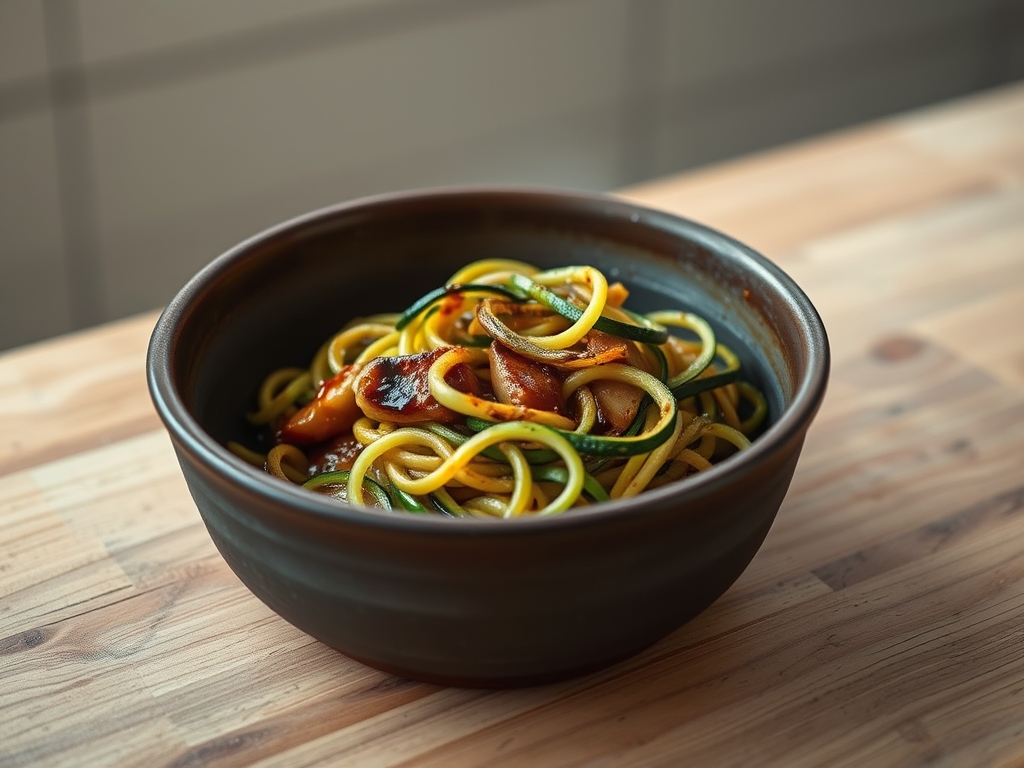
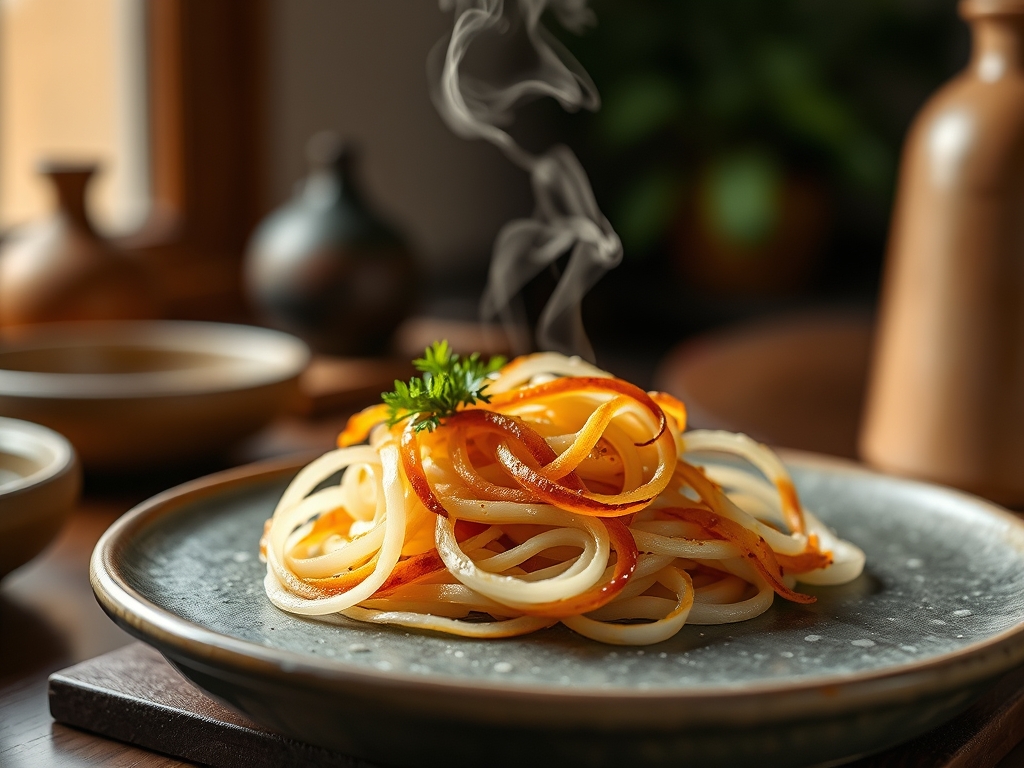
The kitchen is a battlefield of texture and chemistry where the humblest root becomes a structural masterpiece. We are not just making a salad; we are re-engineering the cellular architecture of the Raphanus sativus. When you introduce the Spiralized Daikon Radish to a high-speed blade, you are performing a surgical intervention on its water-dense tissues. This creates a massive increase in surface area that allows for a rapid exchange of flavors. The air smells of sharp sulfur and cold earth, a scent profile that demands respect. As the blade turns, the radish surrenders its rigid form to become a collection of translucent, spring-loaded coils. These spirals are designed to trap viscous dressings in their tight curves, ensuring every bite is an explosion of piquant intensity. Forget the soggy, limp garnishes of the past. We are building a high-performance culinary vehicle that balances crunch with a refined, peppery bite. Prepare your station; we are about to optimize your vegetable intake with the precision of a Swiss watchmaker.
THE DATA MATRIX
| Metric | Specification |
|---|---|
| Prep Time | 12 Minutes |
| Execution Time | 5 Minutes |
| Yield | 4 Servings |
| Complexity (1-10) | 3 |
| Estimated Cost per Serving | $0.85 |
THE GATHERS
Ingredient Protocol:
- 500g / 1.1 lbs Large Daikon Radish (Firm and heavy for its size)
- 30ml / 2 tbsp Toasted Sesame Oil
- 15ml / 1 tbsp Rice Vinegar (Unseasoned)
- 5ml / 1 tsp Light Soy Sauce
- 2g / 0.5 tsp Togarashi Spice Blend
- 1g / 0.25 tsp Fine Sea Salt
- 10g / 2 tsp Toasted Black Sesame Seeds
Section A: Ingredient Quality Audit:
If your Spiralized Daikon Radish feels spongy or lacks that signature snap, you are likely dealing with a dehydrated specimen. Older radishes lose turgor pressure as water evaporates from their cell walls. To fix this, submerge the spiralized strands in a 0 degree Celsius ice bath for ten minutes. This process, known as osmosis, forces water back into the cells to restore structural integrity. If the radish is excessively bitter, the glucosinolates have become too concentrated. A quick rinse in cold, salted water will neutralize the harshest sulfur compounds without stripping the vegetable of its character. Always verify the weight of your produce using a high-precision digital scale to ensure the dressing-to-vegetable ratio remains tactically sound.
THE MASTERCLASS
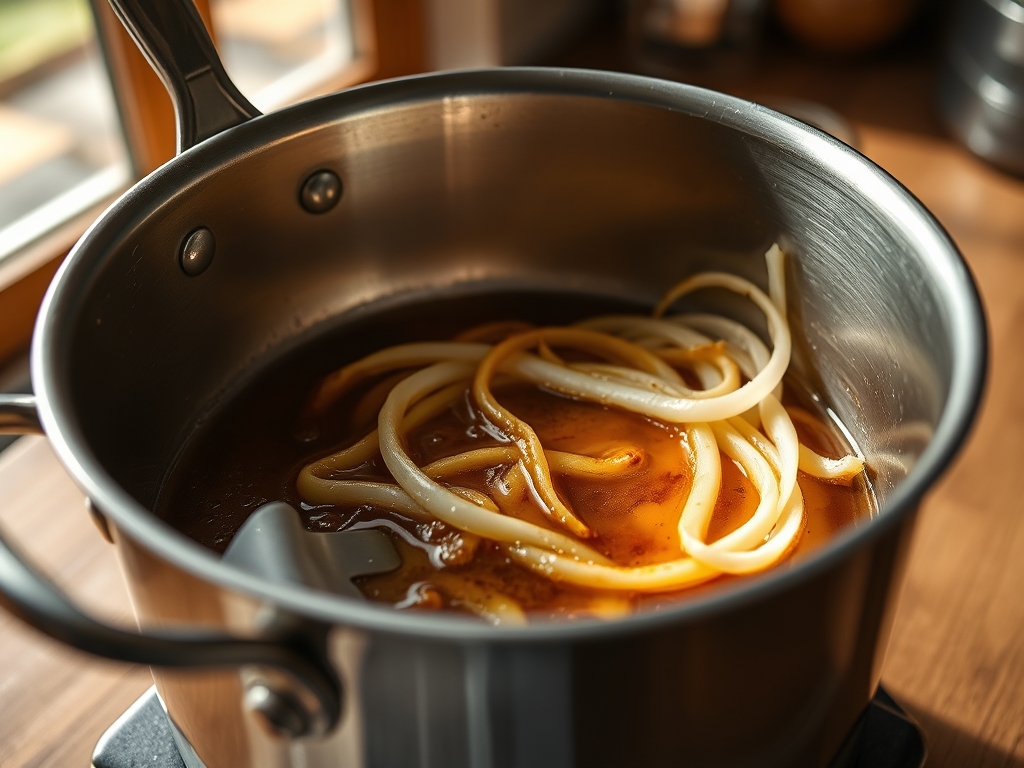
1. Structural Preparation and Stabilization
Begin by removing the foliar end and the root tip with a sharpened chef knife. Use a vegetable peeler to remove the outer skin until the snowy, white flesh is exposed. Secure the radish into the spikes of a heavy-duty spiralizer.
Pro Tip: Use a bench scraper to clear away any skin debris from your workstation immediately. Keeping a clean surface prevents cross-contamination of textures and ensures your Spiralized Daikon Radish remains pristine and white.
2. The Spiralization Sequence
Apply consistent, forward pressure while rotating the crank at a steady cadence. Aim for long, continuous ribbons rather than short, broken segments. The goal is to create a structural "nest" that can support the weight of the dressing.
Pro Tip: The physics of the spiralizer relies on torque. If the radish is off-center, the ribbons will be uneven. Use your digital scale to weigh the final yield; this ensures your seasoning calculations are mathematically perfect for the volume produced.
3. Emulsifying the Piquant Infusion
In a small stainless steel saucier or mixing bowl, combine the sesame oil, rice vinegar, and soy sauce. Use a balloon whisk to aerate the mixture until it becomes a stable emulsion. The fats and acids must be fully integrated to coat the radish evenly.
Pro Tip: A saucier is ideal for mixing because its rounded bottom prevents ingredients from getting trapped in corners. This ensures every drop of the viscous dressing is homogenized before it touches the vegetables.
4. Integration and Aeration
Transfer the radish coils to a large chilled bowl. Drizzle the emulsion over the top and use kitchen tongs to lift and toss the strands. This movement introduces air into the nest, preventing the ribbons from clumping together into a dense, unappealing mass.
Pro Tip: Do not over-mix. Excessive handling can bruise the delicate cell walls of the radish. You want to infuse the flavor while maintaining the structural "spring" seen in the reference photo.
5. Final Garnishment and Calibration
Dust the Togarashi and black sesame seeds over the top from a height of at least twelve inches. This ensures an even distribution of the particulate matter across the entire surface area of the spirals.
Pro Tip: Use a microplane if you wish to add fresh citrus zest at this stage. The high-altitude sprinkle method prevents "clumping" and ensures that every bite contains a balanced ratio of spice and crunch.
Section B: Prep & Timing Fault-Lines:
The most common failure in this protocol is the "weeping" effect. If you dress the Spiralized Daikon Radish too early, the salt in the soy sauce will draw out internal moisture via cellular collapse. This results in a puddle at the bottom of the bowl and limp noodles. To avoid this, always dress the radish within five minutes of service. If you are meal prepping, store the spiralized radish in a sealed container with a damp paper towel and keep the dressing in a separate vial. Only combine them at the moment of consumption to maintain the crisp, structural integrity required for a premium sensory experience.
THE VISUAL SPECTRUM
Section C: Thermal & Visual Troubleshooting:
The reference image shows a vibrant, translucent white with distinct, sharp edges on the spirals. If your radish appears dull or gray, it has oxidized. Prevent this by adding a touch of ascorbic acid (lemon juice) to your ice bath. If the dressing looks "broken" or oily on the plate, your emulsion was not stable enough. Re-whisk the dressing with a drop of mustard to act as a stabilizer before pouring. If the coils look flat rather than voluminous, you have likely compressed them during the mixing phase. Use a "lift and drop" technique with your tongs to re-aerate the nest and restore the three-dimensional architecture seen in the Masterclass photo.
THE DEEP DIVE
Macro Nutrition Profile:
Per serving, this dish is a powerhouse of low-density nutrition. You are looking at approximately 45 calories, 3.5g of healthy fats (primarily monounsaturated from sesame oil), 4g of carbohydrates, and 2g of fiber. It is a high-volume, low-calorie solution for satiety.
Dietary Swaps:
For a Keto-compliant version, ensure the rice vinegar is sugar-free. To make this strictly Vegan, ensure your soy sauce is not processed with any animal-derived clarifying agents. For a Gluten-Free alternative, swap the soy sauce for liquid aminos or tamari.
Meal Prep & Reheating Science:
Never reheat this dish. The heat will render the radish soft and destroy the piquant flavor profile. To store, keep the raw spirals in a pressurized container with a nitrogen flush if possible; otherwise, a simple airtight bag with the air squeezed out will suffice for 48 hours. The molecular structure of the radish is best maintained at 4 degrees Celsius.
THE KITCHEN TABLE
How do I keep the spirals from being too long?
Use your kitchen shears to snip the ribbons every six inches during the spiralizing process. This makes the dish easier to plate and consume without sacrificing the aesthetic appeal of the long, elegant coils.
Can I use a mandoline instead of a spiralizer?
A mandoline with a julienne blade will produce straight matchsticks rather than coils. While the flavor remains identical, you lose the structural "spring" and the ability to trap dressing within the curves of the Spiralized Daikon Radish.
Why is my radish smelling like sulfur?
Daikon contains high levels of isothiocyanates. These are healthy but pungent. A quick soak in cold water with a splash of milk or rice water can help neutralize the odor without affecting the crunch.
Is the skin of the daikon edible?
Technically yes, but it is fibrous and often contains a higher concentration of bitter compounds. For the refined texture required in this infrastructure audit, peeling is a mandatory step for a superior mouthfeel.