Stop settling for the limp, uninspired shavings of a supermarket salad bar. We are here to discuss the structural integrity of the root vegetable; specifically, we are engineering a masterwork of Curly Carrot Strands that defy the standard laws of culinary gravity. When you apply mechanical force to a high-density Daucus carota, you are not just making a garnish. You are creating a high-surface-area matrix designed to trap emulsions and maximize the distribution of piquant dressings. Imagine the crunch: a rhythmic, percussive snap that resonates through the jaw, followed by a release of natural sugars and earthiness. This is a technical audit of texture. We are looking for tensile strength that holds up under the weight of a heavy vinaigrette without collapsing into a soggy, fibrous mess. If your spirals look like wet yarn, you have failed the first law of vegetable dynamics. We demand structural rigidity. We demand a vibrant, neon-orange aesthetic that screams freshness. Prepare your station; we are moving from amateur prep to professional-grade fiber manipulation.
THE DATA MATRIX
| Metric | Specification |
|---|---|
| Prep Time | 15 Minutes |
| Execution Time | 5 Minutes |
| Yield | 4 Servings |
| Complexity (1-10) | 3 |
| Estimated Cost per Serving | $0.85 USD |
THE GATHERS
Ingredient Protocol:
- 500g / 4 large Thick-Girth Heirloom Carrots (Cold-stored)
- 30ml / 2 tbsp Extra Virgin Olive Oil (High polyphenol count)
- 15ml / 1 tbsp Rice Wine Vinegar
- 5ml / 1 tsp Toasted Sesame Oil (To infuse aromatic depth)
- 2g / 0.5 tsp Maldon Sea Salt
- 1g / 0.25 tsp Freshly cracked White Pepper
- 5g / 1 tsp Black Sesame Seeds (For visual contrast)
Section A: Ingredient Quality Audit:
The primary failure point in Curly Carrot Strands is the selection of flaccid, dehydrated roots. If a carrot bends before you cut it, its cellular turgor pressure is compromised. This results in "ragged" edges during spiralization. To fix this, submerge lackluster carrots in an ice-water bath for thirty minutes prior to processing. This rehydrates the vacuoles and restores the rigidity required for clean mechanical shearing. Furthermore, avoid "baby" carrots; these are merely sculpted remnants of larger, often woodier stalks and lack the consistent diameter needed for long, continuous fiber ribbons.
THE MASTERCLASS
1. Thermal Stabilization and Surface Prep
Begin by scrubbing the carrots with a stiff-bristled brush under cold running water. Do not peel unless the skin is exceptionally bitter; the epidermis contains concentrated carotenoids and adds structural "grip" to the strand. Use a digital scale to ensure your yield is consistent.
Pro Tip: Keeping the carrots at 4 degrees Celsius until the moment of contact with the blade ensures a cleaner "snap" at the molecular level. Cold cellulose is more brittle, allowing the spiralizer to shear through the cell walls rather than tearing them.
2. The Mechanical Shear
Secure the carrot into the spindle of a heavy-duty spiralizer. Apply consistent, lateral pressure while rotating the crank at a steady RPM. Your goal is a continuous ribbon that exceeds twelve inches in length. Use a bench scraper to neatly gather the strands as they exit the machine, preventing tangles that lead to uneven dressing distribution.
Pro Tip: If the carrot core is too soft, the spindle will lose its grip. Use a professional-grade unit with a wide-bore centering pin to maintain a "true" axis during the rotation, ensuring your Curly Carrot Strands have a uniform thickness.
3. Emulsification and Infusion
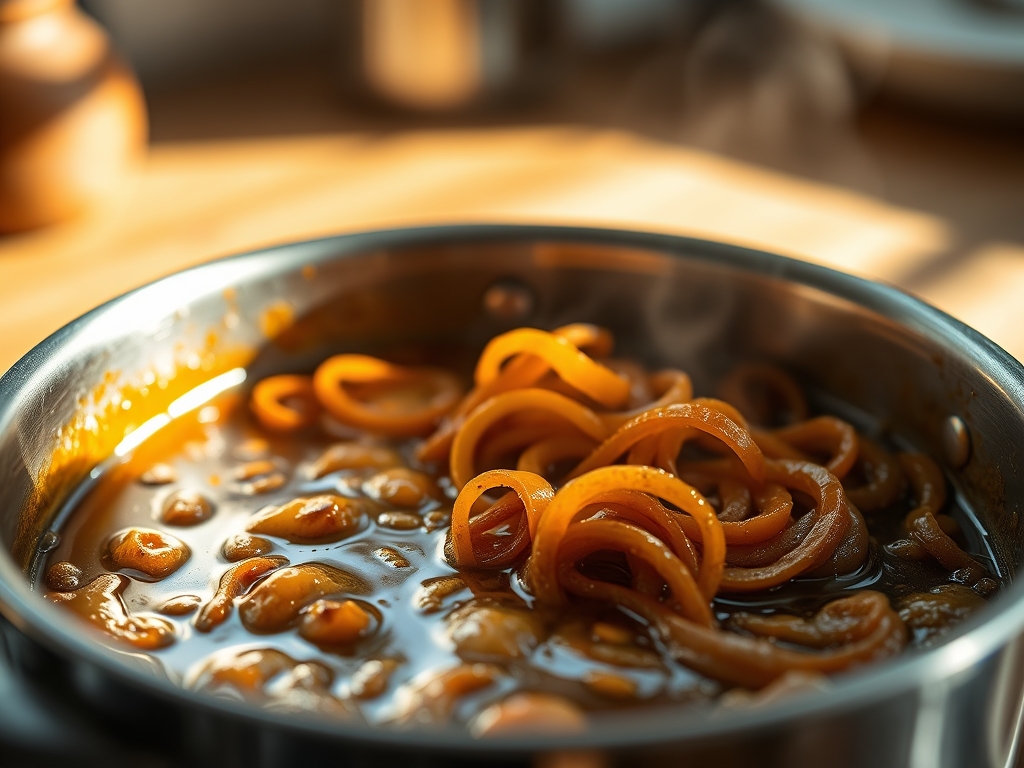
In a small stainless steel saucier, whisk the vinegar, oils, and salt. You are looking to create a temporary emulsion where the oil droplets are finely dispersed. Do not heat this mixture; we want to maintain the raw, vibrant snap of the vegetable. Slowly drizzle the liquid over the strands while tossing lightly with tongs.
Pro Tip: The salt acts as a dehydrator via osmosis. If you dress the carrots too early, they will render their internal moisture, diluting your dressing and turning the bowl into a soup. Dress no more than five minutes before service to maintain the "crunch" factor.
Section B: Prep & Timing Fault-Lines:
The most common human error is the "Over-Toss." Excessive agitation of the strands breaks the delicate curls, turning a sophisticated spiral into a pile of orange confetti. Use a "lift and fold" motion rather than a stir. Additionally, temperature control is vital. If the dressing is too warm, it will soften the pectin in the carrot cell walls, leading to immediate structural collapse. Always ensure your mixing bowl is chilled or at room temperature.
THE VISUAL SPECTRUM
Section C: Thermal & Visual Troubleshooting:
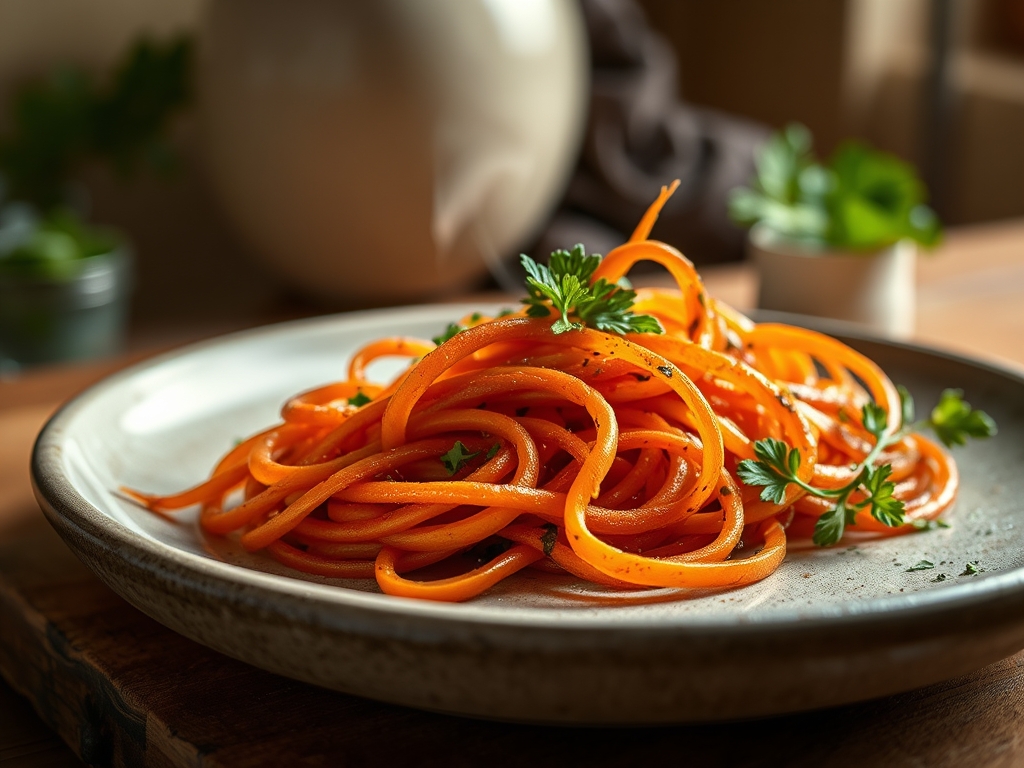
Look at the reference photo above. Note the high-gloss sheen and the way the light catches the edges of the curls. This indicates a perfect oil-to-acid ratio. If your strands look dull or "matte," you have either under-dressed them or the carrot has absorbed the oil due to low density. If the color looks pale, you likely used an oxidized carrot; next time, deglaze your palate with a bit of lemon juice on the root surface to prevent browning. If the strands are clumping, you have neglected to aerate the pile during the dressing phase. Use your fingers to gently fluff the strands, ensuring each curve is coated in a viscous layer of seasoning.
THE DEEP DIVE
Macro Nutrition Profile:
Per serving, this dish is a powerhouse of Vitamin A (Beta-carotene), providing roughly 200 percent of the daily recommended intake. It is low in lipids (6g, primarily monounsaturated from olive oil) and contains approximately 4g of dietary fiber, which is essential for glycemic regulation.
Dietary Swaps:
- Vegan: Already compliant.
- Keto: Replace rice vinegar with apple cider vinegar to lower the trace sugar count; increase the sesame oil for a higher fat-to-carb ratio.
- GF: Naturally gluten-free, provided your rice vinegar is not a malt-based blend.
Meal Prep & Reheating Science:
Never reheat Curly Carrot Strands. The application of heat will cause the pectin to dissolve, resulting in a mushy texture. If meal prepping, store the spiralized carrots in a sealed container with a damp paper towel to maintain humidity. Store the dressing in a separate viscous-proof vial. Combine only at the point of consumption to preserve the molecular integrity of the fiber.
THE KITCHEN TABLE
Why are my carrot strands breaking into small pieces?
This is usually caused by inconsistent pressure during spiralization or using carrots that are too thin. Ensure you select "jumbo" carrots and maintain a steady, firm force against the blade to keep the fiber chain intact.
Can I use a mandoline instead of a spiralizer?
A mandoline with a julienne blade will produce straight sticks, not curls. While the flavor remains identical, you lose the "spring" and surface area that define Curly Carrot Strands. The spiral shape is superior for sauce retention.
How do I keep the carrots from staining my cutting board?
Carotenoids are fat-soluble. Before you begin, rub a light layer of mineral oil on your board. This creates a barrier that prevents the orange pigment from migrating into the wood or plastic pores during your audit.
My dressing is pooling at the bottom of the bowl. Help!
Your emulsion has broken or the carrots have released their internal water. This happens if you salt the carrots too early. Always toss the salad immediately before serving and ensure your oil-to-acid ratio is exactly 3:1.