Listen to the sound of high-octane culinary engineering. It begins with a rhythmic sizzle; a percussive staccato that signals the rapid thermal breakdown of connective tissue. We are not merely making breakfast. We are overseeing the structural transformation of porcine belly into Curly Bacon Strips. This is a study in lipid rendering and protein contraction. When raw, the strip is a flaccid ribbon of intramuscular fat and muscle. Introduce it to a controlled heat source, and the collagen fibers begin to tighten and shrink. Because the fat renders at a different rate than the protein, the strip is forced into a kinetic spiral. The result is a sculptural masterpiece of salt and smoke. We are hunting for that perfect equilibrium where the edges are shattered-glass crisp while the interior remains succulent. If you have ever suffered through a plate of limp, soggy grease-traps, consider this your formal invitation to the elite circle of bacon architecture. We are building flavor from the molecular level up.
THE DATA MATRIX
| Metric | Specification |
|---|---|
| Prep Time | 5 Minutes |
| Execution Time | 15 to 20 Minutes |
| Yield | 4 Servings |
| Complexity (1-10) | 4 |
| Estimated Cost per Serving | $2.25 USD |
THE GATHERS
Ingredient Protocol:
- 450g / 1 lb Thick-cut smoked bacon (High-grade belly)
- 15ml / 1 tbsp Pure maple syrup (Grade A Amber)
- 2g / 1/2 tsp Freshly cracked black peppercorns
- 1g / 1/4 tsp Cayenne pepper (for piquant undertones)
- 30ml / 2 tbsp Water (to regulate initial thermal ramp)
Section A: Ingredient Quality Audit:
The primary failure point in most Curly Bacon Strips is the moisture-to-fat ratio of the raw material. If your bacon is "pumped" with excessive brine, it will steam rather than sear; this leads to a rubbery texture that refuses to curl. To fix this, pat the strips dry with lint-free paper towels before they touch the pan. If the fat appears translucent or grey rather than a vibrant pearlescent white, the lipids have begun to oxidize. You can mitigate minor oxidation by rinsing the strips in ice-cold water and drying them thoroughly, but high-quality, dry-cured pork is the only true insurance policy for a superior render.
THE MASTERCLASS
Step-by-Step Execution:
1. The Cold Start Deployment
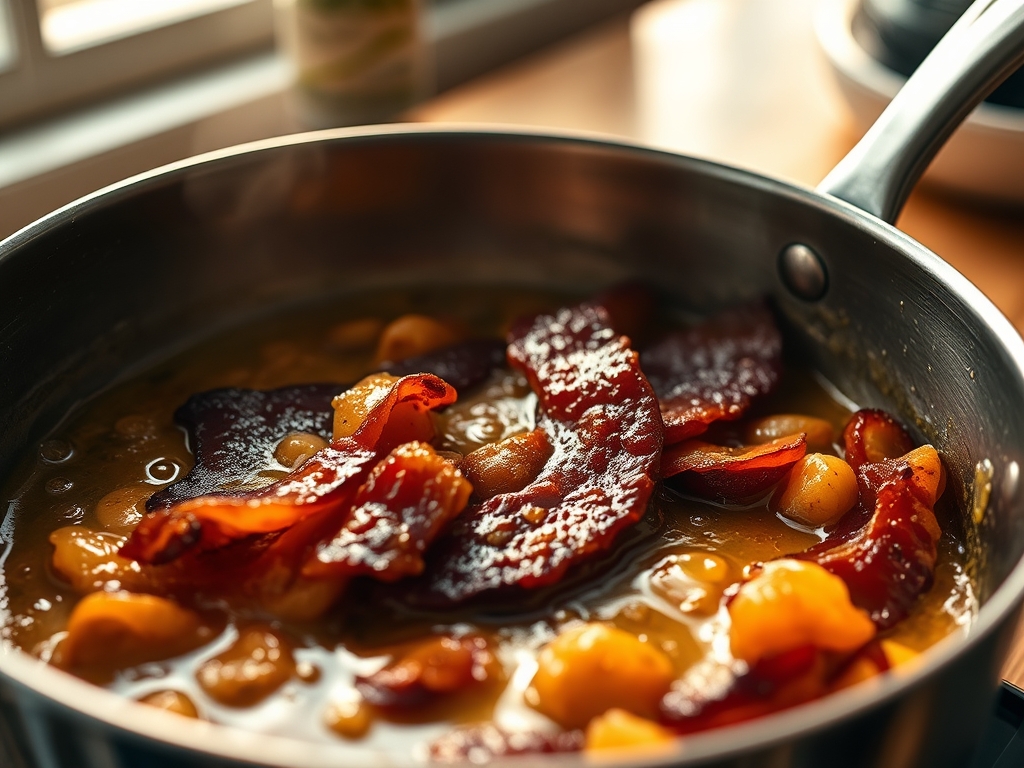
Place your strips in a cold heavy-bottomed skillet or a stainless steel saucier. Do not preheat the vessel. Add the 30ml of water directly to the pan. This allows the fat to begin to render before the protein sears, ensuring the Curly Bacon Strips do not become brittle before they achieve their spiral shape.
Pro Tip: Starting with a cold pan prevents the immediate "locking" of muscle fibers. Using a digital scale to measure your water ensures you don't overwhelm the pan, allowing for a controlled evaporation phase that leads to a more uniform crispness.
2. The Thermal Ramp
Set the heat to medium-low. As the water evaporates, the rendered fat will begin to pool. This is the "viscous phase." Use a bench scraper or tongs to gently nudge the strips, ensuring they do not fuse to the bottom of the pan. You will notice the strips beginning to oscillate and twist.
Pro Tip: The water acts as a thermal buffer. Science dictates that water boils at 212 degrees Fahrenheit, which is well below the Maillard reaction threshold. This ensures the interior fat is fully rendered before the exterior begins to brown, preventing a "burnt-outside-raw-inside" disaster.
3. The Infusion and Glaze
Once the water has completely evaporated and the bacon is swimming in its own liquid gold, tilt the pan to one side. Add the maple syrup, cracked pepper, and cayenne. Use a spoon to infuse the fat with these aromatics, basting the curling strips as they tighten.
Pro Tip: This is a delicate chemical window. The sugars in the syrup will caramelize rapidly. If you notice the fat smoking, immediately remove the pan from the heat. A saucier with sloped sides is the professional tool of choice here; it allows for easier basting and better movement of the strips.
4. The Final Contraction
Continue cooking until the strips have reached a deep mahogany hue and have achieved a tight, spring-like curl. The protein should be firm but not blackened. Use a slotted spatula to move the strips to a wire cooling rack rather than a paper towel.
Pro Tip: Placing the bacon on a wire rack allows air to aerate the entire surface area. If you place them on a flat paper towel, the bottom side will trap steam, destroying the structural integrity of your hard-earned crunch.
Section B: Prep & Timing Fault-Lines:
The most common human error is impatience. If you crank the heat to high to "save time," the exterior proteins will dehydrate and burn before the internal fat can liquify. This results in a bitter, acrid flavor profile. If your timing is off and the bacon finishes before the rest of your meal, do not leave it in the pan. The residual heat of the rendered fat will continue to cook the pork, leading to over-extraction. Move it to the rack immediately.
THE VISUAL SPECTRUM
Section C: Thermal & Visual Troubleshooting:
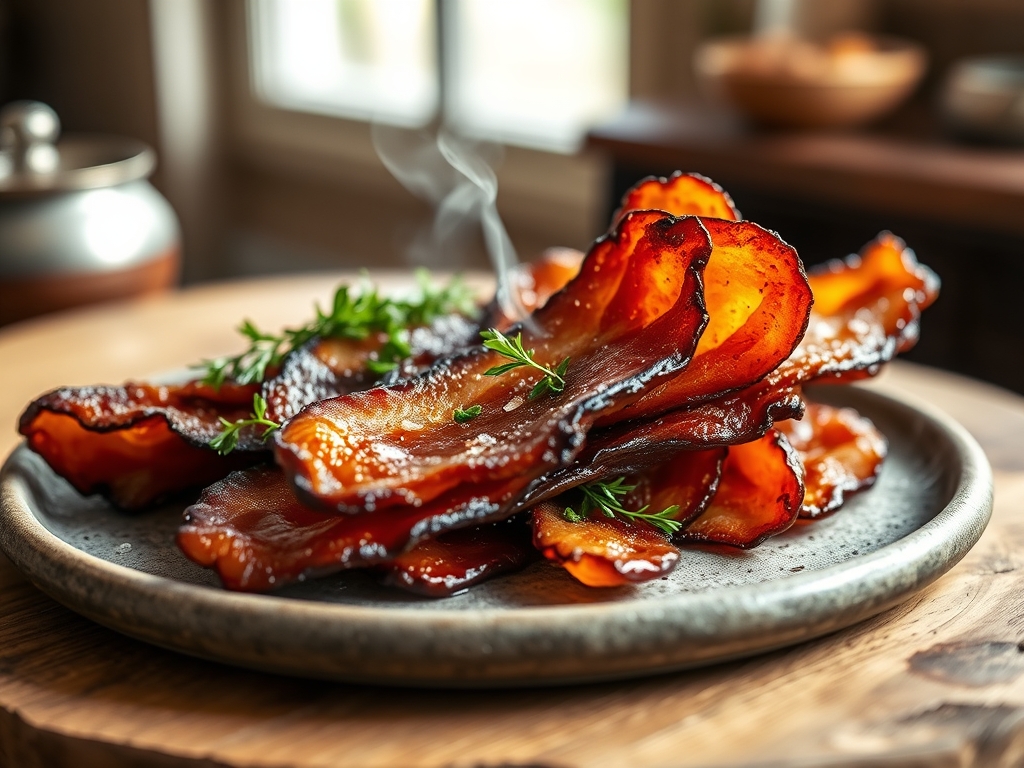
Referencing the Masterclass photo, your Curly Bacon Strips should exhibit a variegated color palette ranging from amber to deep chestnut. If your strips look pale and flabby, your heat was too low or the pan was overcrowded; this prevents the steam from escaping. If the curls are "tight" but the edges are black, your sugar infusion happened too early in the process. Look for the "micro-bubbling" on the surface of the fat. This indicates that the moisture has been replaced by lipid saturation, which is the visual cue for peak crunch.
THE DEEP DIVE
Macro Nutrition Profile:
A standard serving of these strips (approximately 3 large curls) contains 12g of protein, 18g of fat, and 4g of carbohydrates (from the maple glaze). While high in sodium, the rendering process removes a significant portion of the saturated fat that would otherwise remain in the meat.
Dietary Swaps:
- Keto: Eliminate the maple syrup and replace it with a drop of liquid stevia or simply rely on the natural sweetness of the smoked pork.
- Vegan: Use king oyster mushrooms sliced thin with a mandoline. Use liquid smoke and smoked paprika to mimic the flavor profile.
- GF: Ensure your bacon is not processed in a facility that uses grain-based smoke flavorings; most high-end bacon is naturally gluten-free.
Meal Prep & Reheating Science:
To maintain the molecular structure when reheating, avoid the microwave. Microwaves vibrate water molecules, which will turn your crisp spirals into rubbery rings. Instead, use an air fryer or toaster oven at 350 degrees Fahrenheit for 3 minutes. This flashes the surface fat, restoring the "shatter" texture without overcooking the core.
THE KITCHEN TABLE
Why won't my bacon curl?
Usually, this is due to thin-cut slices. You need the structural mass of a thick-cut strip to create the tension required for a spiral. Also, ensure you aren't using a heavy bacon press, which defeats the physics of the curl.
Can I do this in the oven?
Yes, but the results are less kinetic. To achieve the curl in an oven, you must twist each strip manually and lay them on a parchment-lined sheet. Bake at 400 degrees Fahrenheit until the shape is set.
What do I do with the leftover fat?
Never discard the "liquid gold." Filter it through a fine-mesh sieve and store it in a glass jar. Use it to deglaze pans for pan-sauces or as a base for roasting Brussels sprouts to add a smoky depth.
How do I stop the splashing?
The initial water-addition method actually reduces splashing by moderating the temperature. However, using a splatter screen is a wise move for infrastructure safety. It allows steam to escape while containing the energetic lipid projectiles.