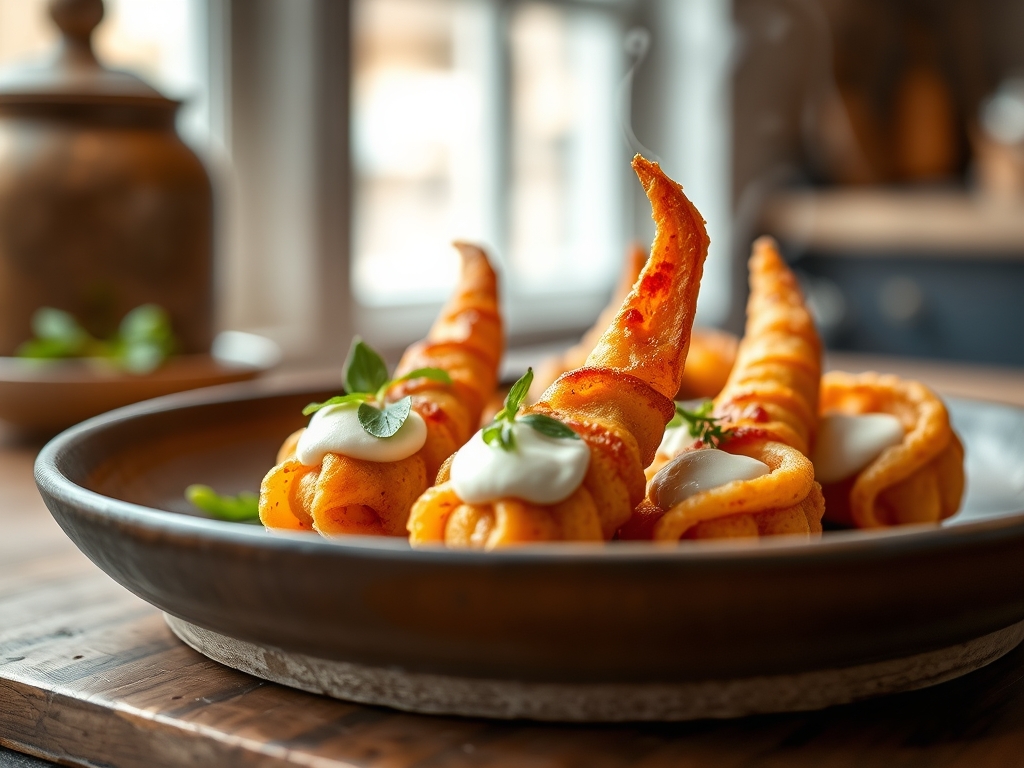
Listen up, kitchen architects and structural flavor enthusiasts. We are not just baking; we are engineering a masterpiece of aerodynamic puff pastry and stabilized dairy suspension. The Curly Cream Horns represent the pinnacle of conical pastry infrastructure. Imagine a spiraled, golden-brown chassis that shatters into a thousand buttery shards upon contact, yielding to a center of cloud-like, sweetened cream. This is a high-stakes operation where thermal dynamics meet mechanical tension. If your lamination fails, your structure collapses. If your cream lacks the necessary viscous integrity, your dessert becomes a structural liability. We are hunting for that perfect contrast: the brittle, caramelized exterior and the velvet-smooth, aerated core. Every wrap of the dough around the metal form must be precise, overlapping just enough to create a sealed chamber for the payload. This is the intersection of geometry and gastronomy. We are here to audit your technique, optimize your workflow, and ensure that every single horn that leaves your station is a testament to culinary excellence. Strap in; we are going deep into the spiral.
THE DATA MATRIX
| Metric | Specification |
|---|---|
| Prep Time | 45 Minutes |
| Execution Time | 25 Minutes |
| Yield | 12 Units |
| Complexity (1-10) | 7 |
| Estimated Cost per Serving | $1.25 |
THE GATHERS
Ingredient Protocol:
- 500g / 1 lb Pre-chilled Puff Pastry (All-butter preferred)
- 480ml / 2 cups Heavy Whipping Cream (Minimum 36% milk fat)
- 100g / 0.5 cup Granulated Sugar (For exterior coating)
- 60g / 0.5 cup Powdered Sugar (For cream stabilization)
- 5ml / 1 tsp Vanilla Bean Paste (For visual speckling and depth)
- 1 Large Egg (For protein-based adhesive wash)
- 15ml / 1 tbsp Water (To thin the wash)
Section A: Ingredient Quality Audit:
The primary failure point in Curly Cream Horns is the fat content of the pastry. If you use a "shortening-based" puff pastry, the mouthfeel will be waxy and the Maillard reaction will be stunted. Always opt for a high-quality, all-butter block. If your pastry feels limp or greasy at room temperature, it has already begun to "leak" fat; return it to the blast chiller immediately.
Regarding the cream: if it has a low fat percentage, it will fail to aerate properly, resulting in a weeping mess. Ensure your cream is as close to freezing as possible before whipping. If the cream appears grainy, you have over-worked the proteins; you must start over or risk serving butter-flavored soup.
THE MASTERCLASS
1. Structural Stripping and Preparation
Using a sharpened bench scraper or a pizza wheel, cut your chilled puff pastry into long, uniform strips approximately 1 inch wide. It is vital that these strips are consistent to ensure even thermal penetration during the bake.
Pro Tip: Use a digital scale to weigh your dough before and after cutting. Consistency in mass ensures that every horn reaches the target internal temperature at the same moment, preventing a mix of burnt and raw units.
2. The Spiral Wrap Maneuver
Lightly grease your metal cream horn molds. Starting at the pointed tip, wrap the pastry strip around the mold, overlapping each layer by about a quarter-inch. This overlap creates the "curly" structural ribs that give the pastry its name and strength.
Pro Tip: Do not stretch the dough as you wrap. Stretching creates tension that will cause the pastry to shrink and unravel in the oven. The goal is a relaxed, overlapping spiral that allows the lamination to expand outward.
3. Protein Adhesion and Glazing
Beat the egg and water in a small saucier or bowl until homogenous. Lightly brush the exterior of the spirals, then roll the top side in granulated sugar. This creates a crunchy, caramelized shell that protects the inner crumb.
Pro Tip: The egg wash acts as a culinary glue and a catalyst for browning. The proteins in the egg undergo a rapid Maillard reaction, providing that deep mahogany hue seen in professional patisseries.
4. Thermal Execution
Place the horns on a parchment-lined baking sheet and bake at 400F (200C) for 15 to 20 minutes. They must be rigid and golden. Once removed, let them sit for exactly two minutes before gently sliding the metal molds out.
Pro Tip: Removing the molds while the pastry is still warm prevents the sugar from cooling and "locking" the pastry onto the metal. Use a dry kitchen towel to handle the hot molds; safety is a non-negotiable infrastructure requirement.
5. Stabilized Cream Infusion
In a chilled bowl, whip the heavy cream, powdered sugar, and vanilla bean paste until stiff peaks form. Transfer the mixture to a piping bag fitted with a star tip and infuse the hollow centers of the cooled pastry shells.
Pro Tip: The powdered sugar contains cornstarch, which acts as a secondary stabilizer for the cream. This prevents the cream from collapsing under its own weight, ensuring the horn remains plump and attractive for service.
Section B: Prep & Timing Fault-Lines:
The most common timing error occurs during the cooling phase. If you fill a warm pastry shell with chilled cream, the residual heat will melt the fat globules in the cream, causing an immediate structural failure. The shell must be at ambient room temperature. Furthermore, if the dough is handled too much, the heat from your hands will melt the butter layers, destroying the "puff" and resulting in a dense, tough biscuit rather than a light, flaky horn.
THE VISUAL SPECTRUM
Section C: Thermal & Visual Troubleshooting:
Referencing the Masterclass photo, notice the distinct, defined ridges of the spiral. If your horns look "flat" or the spirals have merged into a single tube, your oven temperature was likely too low, causing the butter to melt before the steam could puff the layers.
If you see uneven browning (dark on top, pale on the bottom), your baking sheet may be too thin. Use a heavy-duty, professional-grade rimmed baking sheet to ensure even heat distribution. If the tips are burnt while the wide end is pale, you have an airflow issue in your oven; rotate the tray 180 degrees halfway through the bake to compensate for "hot spots." The visual goal is a uniform, honey-gold finish with a visible dusting of crystalline sugar.
THE DEEP DIVE
Macro Nutrition Profile
A single Curly Cream Horn typically contains 320 calories, with 22g of fat, 28g of carbohydrates, and 4g of protein. The high fat content is essential for the flaky texture, but it means these are a high-energy "fuel" source best reserved for post-audit celebrations.
Dietary Swaps
- Vegan: Utilize a plant-based puff pastry (many commercial brands are accidentally vegan) and swap the heavy cream for a whipped coconut cream or a high-fat oat-based whipping agent.
- Keto: This is a challenge. You would need to use a "fathead" dough made of mozzarella and almond flour, and swap the sugar for erythritol or monk fruit.
- GF: Use a gluten-free puff pastry blend. Be warned: GF pastry lacks the elasticity of traditional wheat, so your spirals may need to be thicker to prevent snapping.
Meal Prep & Reheating Science
The molecular structure of puff pastry is hygroscopic; it absorbs moisture from the air and the cream. For maximum integrity, store empty shells in an airtight container at room temperature for up to 48 hours. Do not refrigerate empty shells, as the humidity will turn them rubbery. If they lose their crunch, a 3-minute "flash" in a 350F oven will render the fat and restore the crispness. Always fill immediately before serving.
THE KITCHEN TABLE
Can I make the dough from scratch?
Absolutely. Traditional puff pastry requires a "detrempe" and a butter block. It involves multiple "turns" to create hundreds of layers. It is time-consuming but offers superior flavor and structural height compared to store-bought options.
Why did my cream turn into butter?
You over-agitated the fat globules. Once the cream reaches "stiff peaks," stop immediately. If you continue to whisk, the fat membranes break and clump together, separating from the buttermilk. There is no reversing this process.
Can I use a different filling?
Yes. While sweetened cream is standard, you can infuse the cream with espresso, lemon curd, or even a savory goat cheese mousse for a piquant twist. Ensure any additive is cold to maintain the cream's stability.
How do I prevent the pastry from sticking to the molds?
The "secret" is a combination of a clean mold and the high fat content of the pastry. A very light coating of neutral oil or non-stick spray on the metal forms is a safety net for effortless removal.
My pastry is raw on the inside. What happened?
You likely overlapped the dough too thickly or baked at too high a temperature, browning the outside before the interior could dehydrate. Aim for a moderate, consistent heat to ensure the "core" is fully cooked.