Listen to the sound of structural integrity. It is the rhythmic, glass-shattering snap of forty layers of tissue-thin pastry collapsing under the pressure of a fork. This is not just dessert; it is an architectural marvel of honey and tension. The Rolled Baklava Spiral represents the pinnacle of pastry engineering. Unlike its flat-layered cousins, the spiral utilizes a coiled geometry to trap steam internally while exposing a massive surface area to the convective heat of the oven. This results in a superior crunch-to-syrup ratio. We are talking about a viscous honey infusion that migrates through the capillary pathways of the dough, anchoring a dense, nutty core against a shatter-prone exterior. The scent of rendering butter and toasted walnuts acts as a siren song for the senses. As an auditor of culinary infrastructure, I demand more than just sweetness. I demand a blueprint where the structural load of the nuts is perfectly balanced by the tensile strength of the phyllo. Prepare to deconstruct the classic and rebuild it into a golden, swirling monument of Mediterranean excellence.
THE DATA MATRIX
| Metric | Specification |
|---|---|
| Prep Time | 45 Minutes |
| Execution Time | 50 Minutes |
| Yield | 12 Large Spirals |
| Complexity (1-10) | 7 (High Precision) |
| Estimated Cost per Serving | $1.45 USD |
THE GATHERS
Ingredient Protocol:
- Phyllo Dough (No. 4): 454g / 1 lb (Thawed completely)
- Unsalted Clarified Butter: 225g / 1 cup (High butterfat content)
- Walnuts or Pistachios: 300g / 3 cups (Finely pulsed)
- Granulated Sugar: 200g / 1 cup
- Wildflower Honey: 170g / 1/2 cup
- Water: 240ml / 1 cup
- Lemon Juice: 15ml / 1 tbsp
- Cinnamon (Ceylon): 5g / 1 tsp
- Ground Cardamom: 2g / 0.5 tsp
Section A: Ingredient Quality Audit:
The primary failure point in a Rolled Baklava Spiral is moisture contamination. If your phyllo dough feels tacky or sticks to itself, it has likely undergone a partial thaw-and-refreeze cycle. This destroys the starch lattice. To fix this, you must air-dry the sheets for exactly ninety seconds before brushing with fat. If your walnuts taste bitter, the oils have oxidized. Neutralize this by lightly toasting the nuts at 150C (300F) for eight minutes to render out the stale oils before grinding. Always use clarified butter; the milk solids in standard butter contain water which will steam the dough from the inside out, resulting in a soggy, flaccid structure rather than a crisp one.
THE MASTERCLASS
Step-by-Step Execution:
1. The Nut Matrix Calibration
Combine your pulsed nuts, cinnamon, and cardamom in a stainless steel mixing bowl. Use a digital scale to ensure the weight is distributed evenly. The grind must be uniform; aim for the texture of coarse sand. If the pieces are too large, they will puncture the delicate phyllo sheets during the rolling process.
Pro Tip: Use a bench scraper to toss the mixture. This prevents the heat from your hands from melting the volatile nut oils, which keeps the filling light and prevents it from clumping into a dense, oily paste.
2. The Hydration Syrup Synthesis
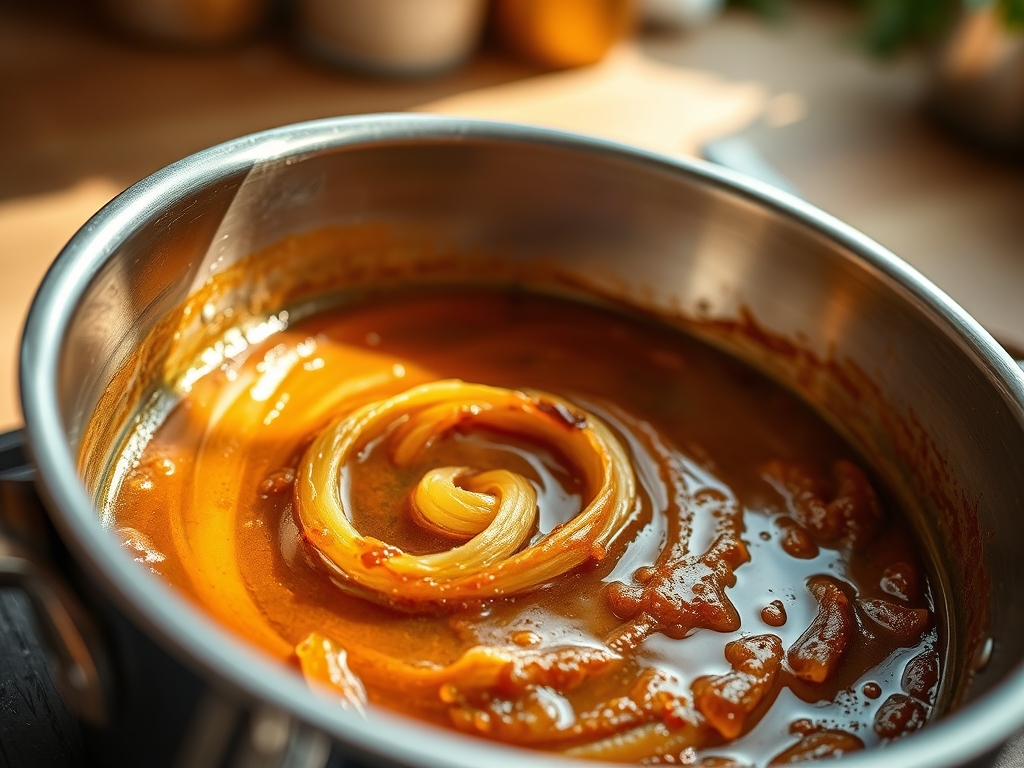
In a heavy-bottomed saucier, combine the sugar, water, honey, and lemon juice. Bring to a simmer over medium heat. Do not stir once the sugar has dissolved; stirring introduces air which can cause crystallization. Simmer until the mixture reaches 105C (221F).
Pro Tip: The lemon juice acts as an invert sugar agent. It breaks down sucrose into glucose and fructose, which prevents the honey from recrystallizing into a gritty texture once the baklava cools.
3. The Structural Layering
Lay one sheet of phyllo on a clean work surface. Brush lightly with clarified butter using a natural bristle pastry brush. Repeat until you have a stack of three sheets. Sprinkle a thin, even layer of the nut mixture across the top third of the pastry.
Pro Tip: This layering creates a laminated effect. The fat acts as a barrier, allowing the air trapped between the sheets to aerate and expand during baking, which is the secret to the signature "shatter" of the spiral.
4. The Coiling Maneuver
Place a thin wooden dowel or a clean curtain rod at the edge of the nut-covered pastry. Roll the dough tightly around the rod. Once rolled, grasp both ends of the dough and push them toward the center, creating a "scrunchie" effect. Slide the dough off the rod and curl it into a tight circular Rolled Baklava Spiral.
Pro Tip: Compression is key. By bunching the dough, you increase the surface area exposed to the butter, which ensures that every micro-fold becomes crispy during the thermal transition in the oven.
5. The Thermal Transformation
Place the spirals into a buttered baking dish, fitting them snugly against one another. Brush the tops generously with the remaining clarified butter. Bake at 175C (350F) for 45 to 50 minutes until the exterior is a deep, burnished gold.
Pro Tip: Use an oven thermometer to verify your heat. Precision is mandatory. The Maillard reaction requires consistent heat to transform the sugars and proteins into the complex, nutty flavor profile we require.
6. The Osmotic Infusion
Immediately upon removing the pan from the oven, pour the cooled syrup over the scorching hot baklava. You should hear a violent sizzle. This temperature differential is vital for the syrup to be drawn into the core of the spiral via capillary action.
Pro Tip: If both the syrup and the pastry are hot, the dough will turn to mush. If both are cold, the syrup will sit on top like a viscous sludge. The "Hot Pastry, Cold Syrup" rule is the law of the kitchen.
Section B: Prep & Timing Fault-Lines:
The most common human error is the "Dry-Out." Phyllo dough is notoriously hydrophobic and will turn into parchment paper if left exposed to air for more than three minutes. Always keep your working stack under a damp (not soaking) microfiber towel. Another timing error occurs during the syrup phase. If you pour too early, you lose the crunch. If you pour too late, the syrup won't penetrate the inner coils. Use a digital scale to measure your syrup yield; you want exactly 1.5 grams of syrup for every gram of dry pastry.
THE VISUAL SPECTRUM
Section C: Thermal & Visual Troubleshooting:
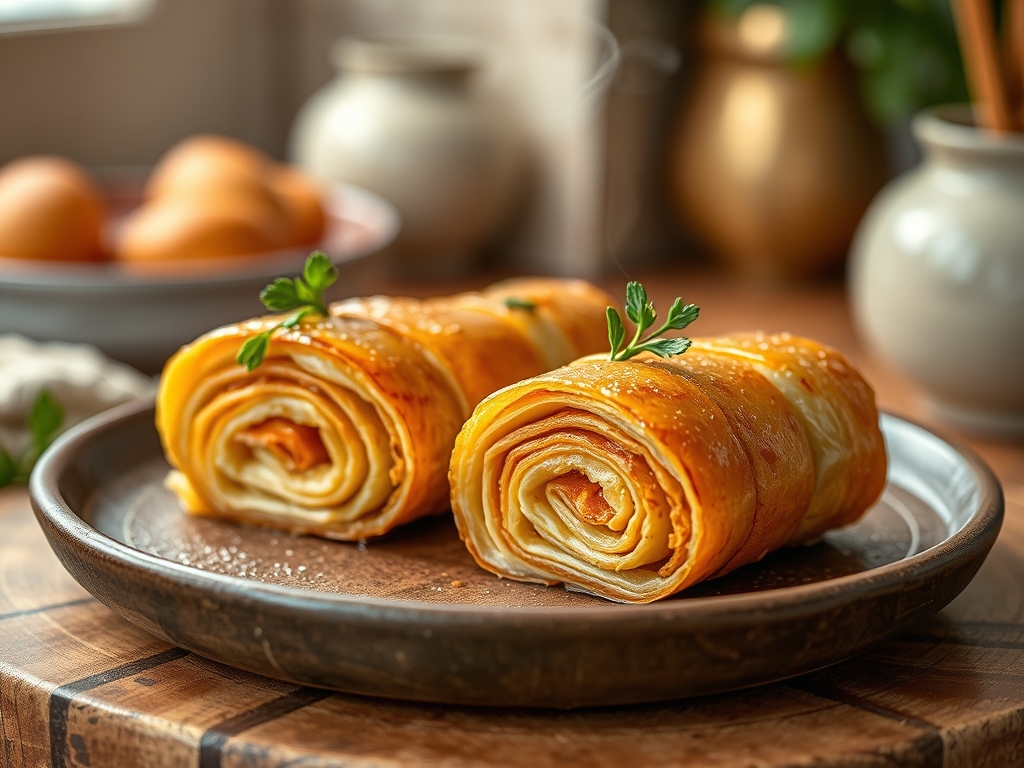
Referencing our Masterclass photo, the ideal Rolled Baklava Spiral should exhibit a gradient of gold. The outermost ridges should be mahogany, while the inner crevices remain a pale honey-amber. If your spirals are a uniform pale yellow, you have failed to render the butter fully; increase your bake time by five minutes. If the bottom is dark but the top is light, your oven rack is too low, causing uneven conductive heating. If the spiral looks "fuzzy" rather than sharp, your nut grind was too fine, and the dust has escaped to the surface. The visual cue for a perfect bake is a "glassy" sheen on the ridges, indicating the sugars have caramelized without burning.
THE DEEP DIVE
Macro Nutrition Profile:
A single spiral is a dense energy source. Expect approximately 320 calories, with 18g of fats (mostly monounsaturated from nuts), 38g of carbohydrates, and 4g of protein. It is high in manganese and copper thanks to the walnut inclusion.
Dietary Swaps:
- Vegan: Replace clarified butter with a high-quality coconut oil or vegan butter substitute. Ensure your honey is swapped for an agave or maple-based infuse syrup.
- Keto: This is difficult given the flour-based phyllo. However, one can use almond flour-based "fathead" dough rolled ultra-thin, though the "shatter" texture will be replaced by a chew.
- Gluten-Free: Use GF-certified phyllo sheets, which are typically made from rice and corn starch.
Meal Prep & Reheating Science:
Baklava is one of the few pastries that improves with age. The molecular structure stabilizes over 24 hours as the syrup fully hydrates the starch. Never refrigerate. Cold temperatures cause the fats to solidify and the sugars to crystallize, ruining the mouthfeel. To reheat, use a toaster oven at 150C (300F) for four minutes to re-crisp the outer layers without scorching the honey.
THE KITCHEN TABLE
Why is my baklava swimming in oil?
You likely used standard butter instead of clarified butter. The water in regular butter prevents the fat from fully integrating with the dough, leaving a greasy residue. Always render your butter to remove milk solids and water.
Can I use peanuts instead of walnuts?
Technically, yes, but peanuts have a higher oil content and a very dominant flavor. Walnuts or pistachios provide the traditional piquant earthiness that balances the intense sweetness of the honey syrup.
How do I stop the phyllo from shattering while I roll?
The dough is too dry. Lightly mist the air above your workspace with a spray bottle or work faster. Ensure your pastry brush is soft; stiff bristles will tear the delicate 0.01mm thick sheets.
My syrup is too thick to pour. What happened?
You over-boiled the mixture, evaporating too much water and moving toward a "hard ball" candy stage. Add 30ml of boiling water and whisk vigorously to deglaze the syrup and return it to a pourable state.