Listen to the sound of structural collapse. It is the high frequency shatter of a thousand micro-layers yielding to a single bite. This is the Curly Palmier Flake; a triumph of mechanical engineering disguised as a tea biscuit. We are not merely baking here. We are managing a high stakes thermal expansion where cold lipids meet intense convection to create a vertical lift that would make an aerospace engineer weep. The palmier is a study in symmetry and torque. As the sugar liquefies, it undergoes a violent transition from granular crystalline to a viscous, amber lava. This syrup binds the laminated dough while simultaneously forcing the layers apart through steam release. If you have ever settled for a soggy, dense puff pastry, you have failed the infrastructure audit. Today, we rectify that. We are hunting for that elusive, shattered glass texture and a deep, mahogany caramelization that borders on the bittersweet. Prepare your bench scraper and calibrate your scales. We are about to render butter into architectural gold.
THE DATA MATRIX
| Metric | Specification |
|---|---|
| Prep Time | 45 Minutes (Active) |
| Execution Time | 25 Minutes |
| Yield | 24 Units |
| Complexity (1-10) | 7 |
| Estimated Cost per Serving | $0.45 |
THE GATHERS
Ingredient Protocol:
- 500g / 4 cups All-Purpose Flour (High protein content preferred)
- 500g / 2.2 cups Unsalted European Butter (Minimum 82% butterfat), chilled
- 250ml / 1 cup Ice Cold Water
- 5g / 1 tsp Fine Sea Salt
- 200g / 1 cup Granulated Sugar (For lamination and coating)
- 5g / 1 tsp Ground Cinnamon (Optional aromatic)
Section A: Ingredient Quality Audit:
The primary failure point in a Curly Palmier Flake is moisture management. If your flour is stored in a high humidity environment, it has already begun to hydrate, which will lead to premature gluten development and a "bread-y" texture. Fix: Sift your flour and briefly chill it to ensure it remains desiccated. If your butter is domestic "supermarket" grade, it likely contains too much water. During the bake, this water turns to steam too quickly, causing the pastry to explode rather than flake. Technical Fix: If using low-grade butter, increase your chilling time between folds to ensure the fat remains plastic rather than liquid.
THE MASTERCLASS
1. The Detrempe Construction
Combine your flour and salt in a chilled bowl. Work in 50g of the butter until it resembles coarse sand. Slowly infuse the ice water into the mixture until a shaggy dough forms. Do not overwork. Use a bench scraper to fold the dough onto itself until it just holds together.
Pro Tip: The science here is about inhibiting gluten. By coating some of the flour molecules in fat early on, you prevent long protein chains from forming, ensuring the final product remains tender rather than chewy.
2. The Butter Block Integration
Flatten your remaining cold butter between two sheets of parchment paper into a precise square. This is your "beurrage." Encase the butter block within your rolled-out dough (the detrempe). Use a digital scale to ensure your dough and butter are at similar densities; if one is significantly harder than the other, the layers will shatter internally.
Pro Tip: Professional pastry chefs use a "lock-in" technique. The goal is to create a seamless envelope of dough so that no butter escapes during the initial rolling phase.
3. The Lamination Cycles
Perform four "letter folds." Roll the dough into a long rectangle, then fold it in thirds like a business letter. Rotate 90 degrees and repeat. Chill for 30 minutes between every two folds. This creates hundreds of microscopic layers of fat and flour.
Pro Tip: Each fold increases the layer count exponentially. By the fourth fold, you have created the structural foundation for the Curly Palmier Flake. Use a heavy rolling pin to maintain even pressure across the entire surface.
4. The Sugar Torque
On your final turn, replace the flour on your work surface with granulated sugar. Roll the dough directly into the sugar, pressing it into the surface. Fold the left and right sides toward the center until they meet, then fold one half over the other like a closing book.
Pro Tip: The sugar acts as a physical barrier between the dough layers. During baking, it will render into a caramel that provides the structural "crunch" while the butter creates the "flake."
5. The Precision Slice
Chill the log until it is firm. Use a sharp serrated knife or a dedicated pastry blade to cut 1cm thick slices. Place them on a silicone mat, leaving ample space for the "butterfly" expansion.
Pro Tip: If the dough is too soft, the knife will compress the layers, sealing the edges and preventing the pastry from opening. A chilled dough ensures a clean cut that allows the steam to aerate the flakes effectively.
Section B: Prep & Timing Fault-Lines:
The most common human error is "The Warm Hand Syndrome." If your kitchen is above 72 degrees Fahrenheit, your butter will begin to melt into the flour, turning your lamination into a standard shortcrust. Fix: Chill your marble slab or work surface with ice packs before rolling. If the dough feels tacky, stop immediately and return it to the freezer for ten minutes. Timing the bake is equally critical; if you pull them too early, the interior remains viscous and raw. If you wait too long, the sugar burns.
THE VISUAL SPECTRUM
Section C: Thermal & Visual Troubleshooting:
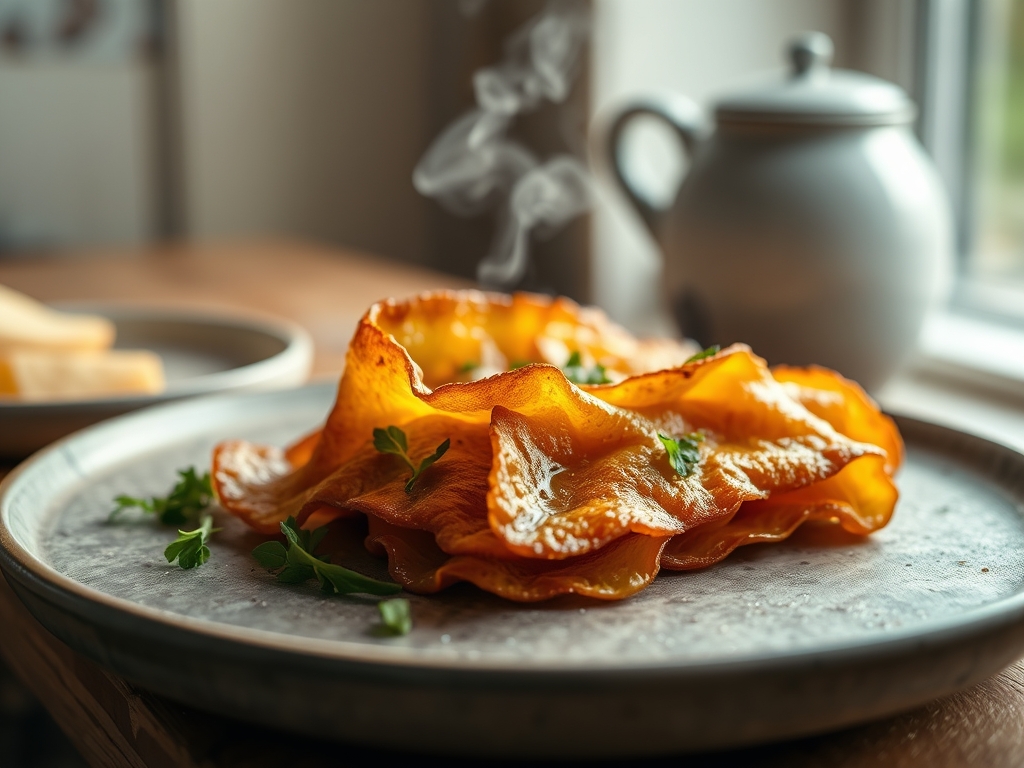
Referencing the Masterclass photo, your Palmiers should exhibit a distinct "V" shape with clearly defined, concentric rings. If your pastries look "clumped" or haven't opened, your oven temperature was likely too low, failing to trigger the rapid steam expansion required for the "flake" effect. If the edges are black while the center is white, your sugar distribution was uneven. To fix dull colors, ensure you are using a heavy-duty baking sheet that distributes heat evenly. The ideal visual cue is a "shimmering amber" finish where the sugar has fully vitrified into a glass-like coating.
THE DEEP DIVE
Macro Nutrition Profile:
These are energy-dense units. Each serving contains approximately 180 calories, 12g of fat, 18g of carbohydrates, and 2g of protein. They are a high-carb, high-fat fuel source designed for sensory indulgence rather than daily sustenance.
Dietary Swaps:
- Vegan: Substitute European butter with a high-quality plant-based butter block (ensure it has a high melting point).
- Keto: This is nearly impossible due to the structural requirement of flour and sugar, but a gluten-free flour blend with xanthan gum can provide a similar, albeit less shattered, result.
- GF: Use a 1-to-1 pastry flour replacement, but increase the chilling time by 50% to allow the starches to hydrate.
Meal Prep & Reheating Science:
To maintain the molecular structure, never microwave a palmier. The moisture will migrate from the center to the crust, ruining the flake. To reheat, use a toaster oven at 300 degrees Fahrenheit for 4 minutes. This recrystallizes the sugar and evaporates any ambient moisture absorbed from the air.
THE KITCHEN TABLE
Why are my palmiers tough instead of flaky?
You likely overworked the dough, developing too much gluten. Next time, use less pressure when rolling and ensure the dough stays cold. If the butter melts into the flour, the lamination is lost and the pastry becomes bread-like.
Can I use store-bought puff pastry?
You can, but you sacrifice the "Curly" integrity. Commercial pastry often uses oils that lack the flavor profile and sharp melting point of high-fat butter. If you must, ensure it is "all-butter" puff pastry for the best results.
My sugar is burning before the pastry is cooked!
Your oven rack is likely too low. Move the tray to the upper third of the oven. This allows the convection heat to cook the dough while the radiant heat from the bottom doesn't incinerate the sugar base.
How do I get that perfect symmetrical shape?
Precision folding is key. Use a ruler to ensure your dough rectangle is perfectly even before you begin the final "book fold." If the sides are uneven, the torque will be lopsided during the bake.