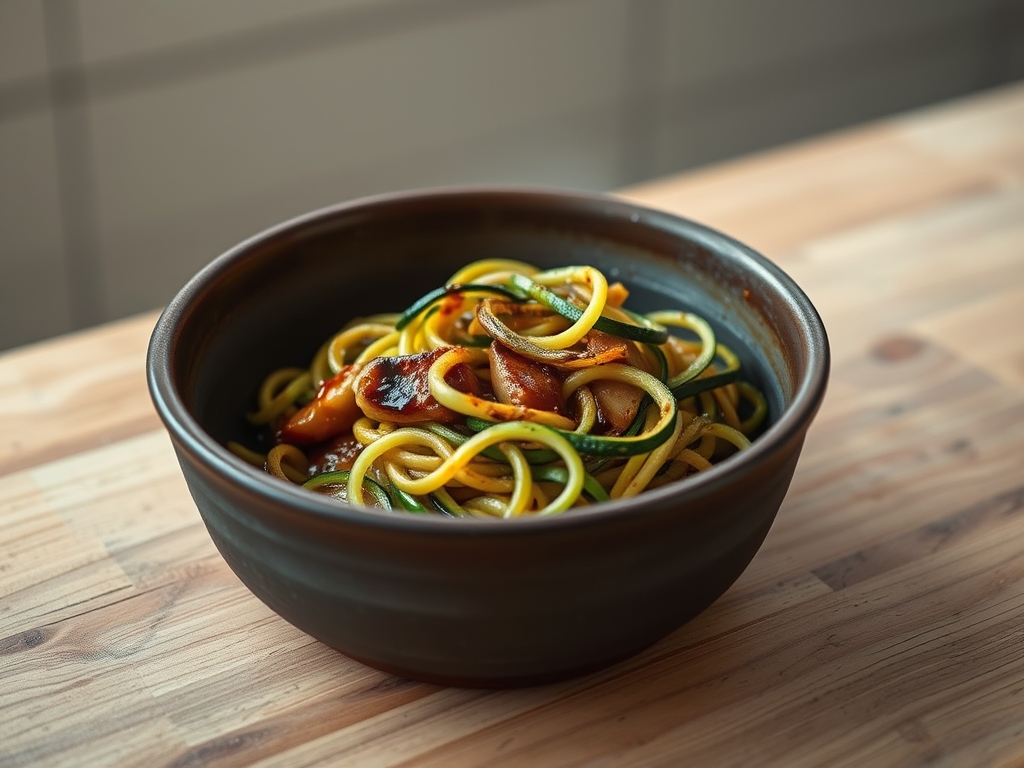
Imagine a kitchen where the air is thick with the scent of browned butter and the frantic, rhythmic scraping of metal against steel. This is not your grandmother's quiet Sunday afternoon noodle session; this is high-octane culinary engineering. We are talking about the chaotic beauty of Spiralized Spatzle. This dish represents the ultimate collision between German comfort and modern mechanical precision. Traditional spatzle is often a humble, misshapen drop dumpling, but when we apply the principles of egg dough extrusion, we transform a simple batter into a high-surface-area masterpiece. The goal is a noodle that is simultaneously tender and resilient, capable of capturing every drop of a rich, emulsified sauce within its irregular ridges. Every curl is a deliberate structural choice designed to maximize the Maillard reaction during the final sear. We are not just boiling dough; we are building a foundation for flavor. Prepare your workstation for a high-output session where timing is the only currency that matters and the result is a plate of golden, spiraled perfection that defies standard pasta geometry.
THE DATA MATRIX
| Metric | Specification |
|---|---|
| Prep Time | 20 Minutes |
| Execution Time | 15 Minutes |
| Yield | 4 Servings |
| Complexity (1-10) | 7 |
| Estimated Cost per Serving | $1.85 |
THE GATHERS
Ingredient Protocol:
- All-Purpose Flour: 500g / 4 cups
- Large Farm-Fresh Eggs: 5 units / approx. 250ml
- Whole Milk: 120ml / 0.5 cup
- Fine Sea Salt: 10g / 2 tsp
- Freshly Grated Nutmeg: 2g / 0.5 tsp
- Unsalted European Butter: 115g / 1 stick
- Fresh Parsley (Minced): 30g / 0.25 cup
- Sparkling Water (Cold): 60ml / 0.25 cup
Section A: Ingredient Quality Audit:
The most common failure point in Spiralized Spatzle is the hydration level of the flour. If your flour has been sitting in a humid pantry, it will be more viscous than intended, leading to a gummy texture. To fix this, always weigh your flour with a digital scale rather than using volume measurements. If the batter feels too slack, do not just dump in more flour; instead, sifting in 15g increments to maintain a smooth consistency. Another critical audit point is the egg quality. Pale yolks result in a dull, anemic noodle. If your yolks lack vibrancy, infuse the milk with a pinch of turmeric to mimic the golden hue of high-quality pasture-raised eggs. Finally, ensure your nutmeg is freshly grated. Pre-ground nutmeg loses its piquant volatile oils within weeks; the friction of a microplane is required to unlock the essential aromatics.
THE MASTERCLASS
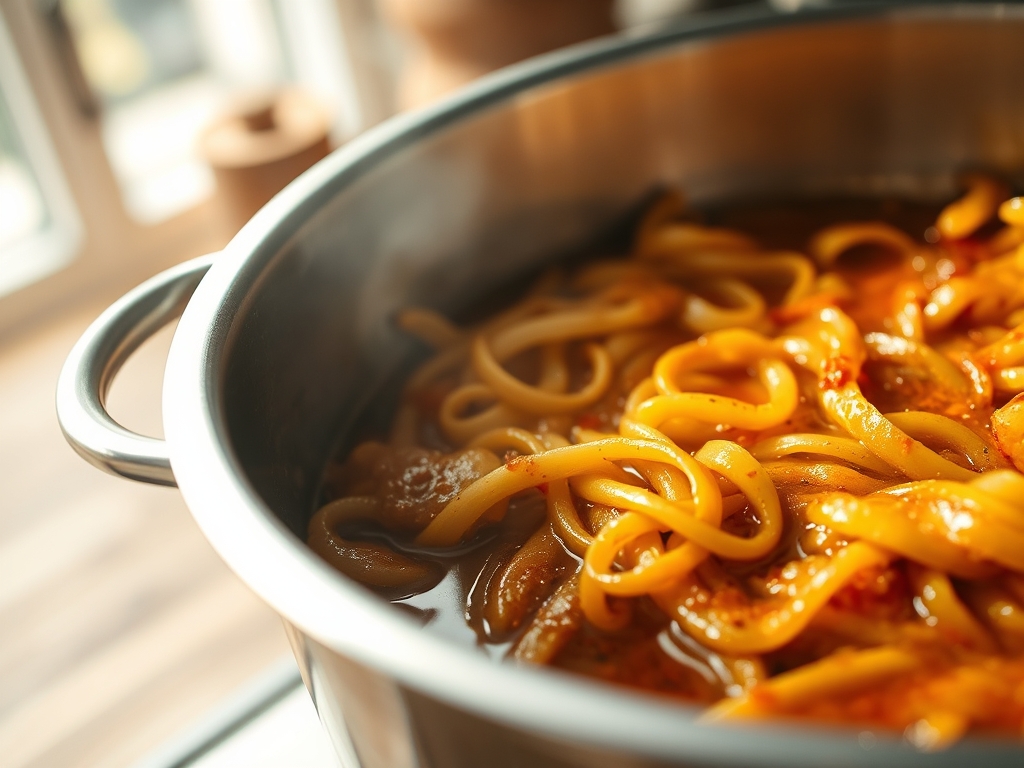
Step 1: The Molecular Emulsion
Whisk the eggs, milk, and sparkling water in a stainless steel mixing bowl until the mixture is fully aerated. Gradually incorporate the salt and nutmeg. The introduction of CO2 via sparkling water creates micro-pockets of air that will expand during the boiling phase, ensuring the noodles are not dense lead weights.
Pro Tip: Use a balloon whisk to maximize air incorporation. The science here is simple: more air equals more buoyancy, which prevents the dough from sinking and sticking to the bottom of your pot.
Step 2: Developing the Gluten Matrix
Slowly add the flour to the wet assembly. Use a bench scraper or a heavy wooden spoon to beat the dough vigorously until it starts to "blister" or show air bubbles. This physical labor develops the gluten just enough to provide a "snap" without making the dough tough.
Pro Tip: The dough should be elastic enough to hang from the spoon for three seconds before dropping. If it falls instantly, add a tablespoon of flour to increase the structural integrity of your Spiralized Spatzle.
Step 3: High-Pressure Extrusion
Bring a large pot of salted water to a rolling boil. Position your spatzle press or a perforated gastro-tray over the steam. Force the dough through the holes directly into the water. Work in small batches to prevent the water temperature from dropping significantly.
Pro Tip: Dip your bench scraper or press into the boiling water before adding the dough. This creates a thermal barrier that prevents the raw batter from sticking to the equipment, ensuring clean, individual curls.
Step 4: The Shock Recovery
As soon as the noodles float to the surface (usually within 2 to 3 minutes), use a spider strainer to remove them. Immediately plunge them into an ice bath for 30 seconds to halt the cooking process. Drain them thoroughly and toss with a teaspoon of neutral oil.
Pro Tip: Drying the noodles on a sheet pan after the ice bath is crucial. Excess moisture is the enemy of the Maillard reaction; if the noodles are wet, they will steam in the pan rather than sear.
Step 5: The Maillard Finish
Heat a heavy-bottomed saucier or cast-iron skillet over medium-high heat. Melt the butter until the milk solids begin to render and turn a nutty brown. Add the dried spatzle in a single layer. Do not stir for the first 60 seconds to allow a crust to form.
Pro Tip: Use a digital infrared thermometer to ensure your pan is at least 375 degrees Fahrenheit. This temperature is the sweet spot for rapid browning without scorching the delicate butter solids.
Step 6: The Final Emulsion and Garnish
Once the noodles are crispy and golden, add a splash of the pasta cooking water and the minced parsley. Shake the pan vigorously to deglaze the browned bits and create a light, silky sauce that clings to the spirals.
Pro Tip: Adding a squeeze of lemon juice at this stage provides an acid hit that cuts through the fat, balancing the dish's heavy profile and brightening the overall flavor spectrum.
Section B: Prep & Timing Fault-Lines:
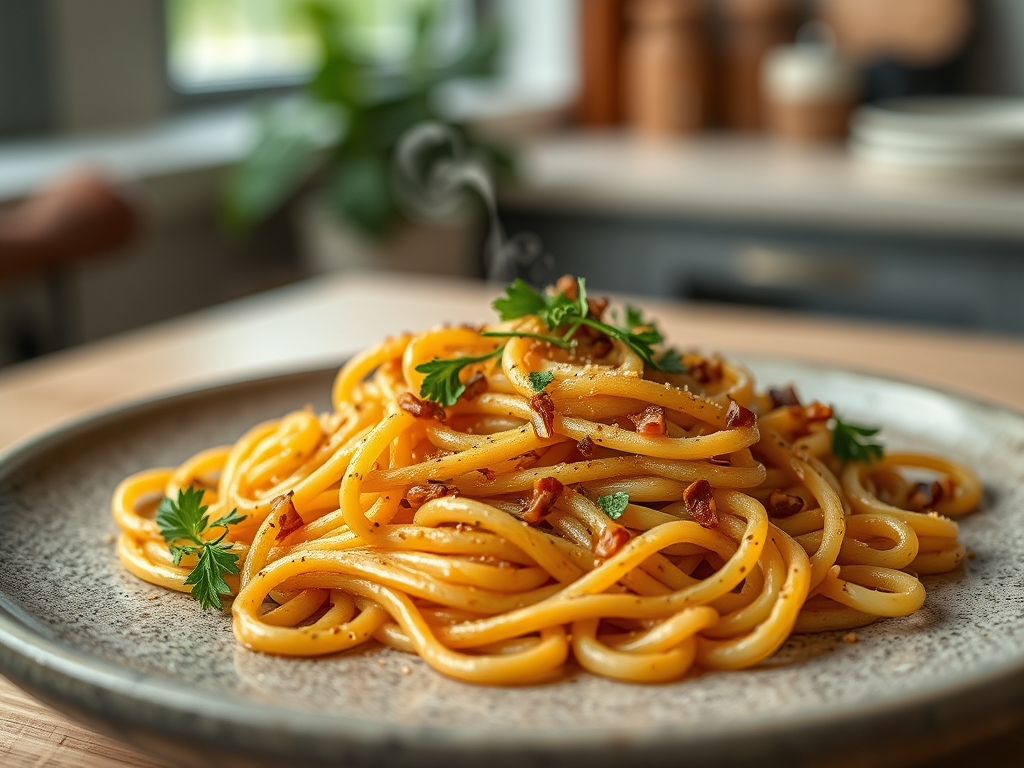
The most frequent human error is the "crowded pan" syndrome. If you attempt to sear too much spatzle at once, the ambient temperature of the skillet drops, and the butter begins to boil the noodles rather than frying them. This results in a soggy, oily mess. Always sear in batches. Additionally, timing the extrusion is critical. If the dough sits in the boiling water for even sixty seconds too long, the starch granules over-expand and burst, leading to a loss of the "curly" definition seen in the Masterclass photo. Keep your digital timer active and trust the "float" cue.
THE VISUAL SPECTRUM
Section C: Thermal & Visual Troubleshooting:
Look closely at the reference image. You should see distinct, jagged edges with deep amber highlights on the protrusions. If your Spiralized Spatzle looks uniform and pale, your heat was too low. If the noodles appear shattered or "fuzzy," your dough was likely too thin, causing it to disintegrate upon contact with the water. To fix uneven browning, ensure your butter is evenly distributed and that you are using a pan with high thermal mass, like carbon steel. If the color is dull, you likely skipped the "shock" phase in the ice bath, which allows the starches to continue hydrating and turning translucent rather than opaque and bright.
THE DEEP DIVE
Macro Nutrition Profile:
A standard serving of this dish is energy-dense, providing approximately 450 calories, 15g of protein, 55g of carbohydrates, and 18g of fat. The high egg content ensures a solid amino acid profile, making this more nutritionally substantial than standard wheat pasta.
Dietary Swaps:
For a Vegan version, substitute the eggs with a mixture of silken tofu and chickpea flour to maintain the density; use a high-quality vegan butter for the sear. For Gluten-Free requirements, a blend of rice flour and xanthan gum works best, though the extrusion will require a slightly larger hole diameter to prevent clogging.
Meal Prep & Reheating Science:
To maintain the molecular structure when reheating, avoid the microwave. The microwave excites water molecules, which will turn your crispy crust into a rubbery skin. Instead, re-sear the spatzle in a hot pan with a teaspoon of water and a lid for 60 seconds to re-hydrate the core, then remove the lid to crisp the exterior.
THE KITCHEN TABLE
Why is my spatzle dough so sticky?
High protein content in flour and humidity are the culprits. The dough should be tacky but pull away from the bowl cleanly. Use a bench scraper to handle it and keep your tools hydrated with cold water.
Can I make the dough in advance?
Yes, you can refrigerate the dough for up to 12 hours. However, the starch will continue to hydrate, so you may need to whisk in a tablespoon of milk to restore the original viscous flow before extrusion.
What is the best tool for the spiral shape?
A dedicated spatzle lid with large holes or a heavy-duty potato ricer with the largest setting. The key is consistent pressure during the extrusion to ensure the noodles form long, irregular curls rather than small drops.
How do I get that deep golden color?
The secret is the "double-cook" method. Boiling sets the structure, but the sear in browned butter creates the color. Do not skimp on the butter; the milk solids are what provide that characteristic toasted mahogany hue.