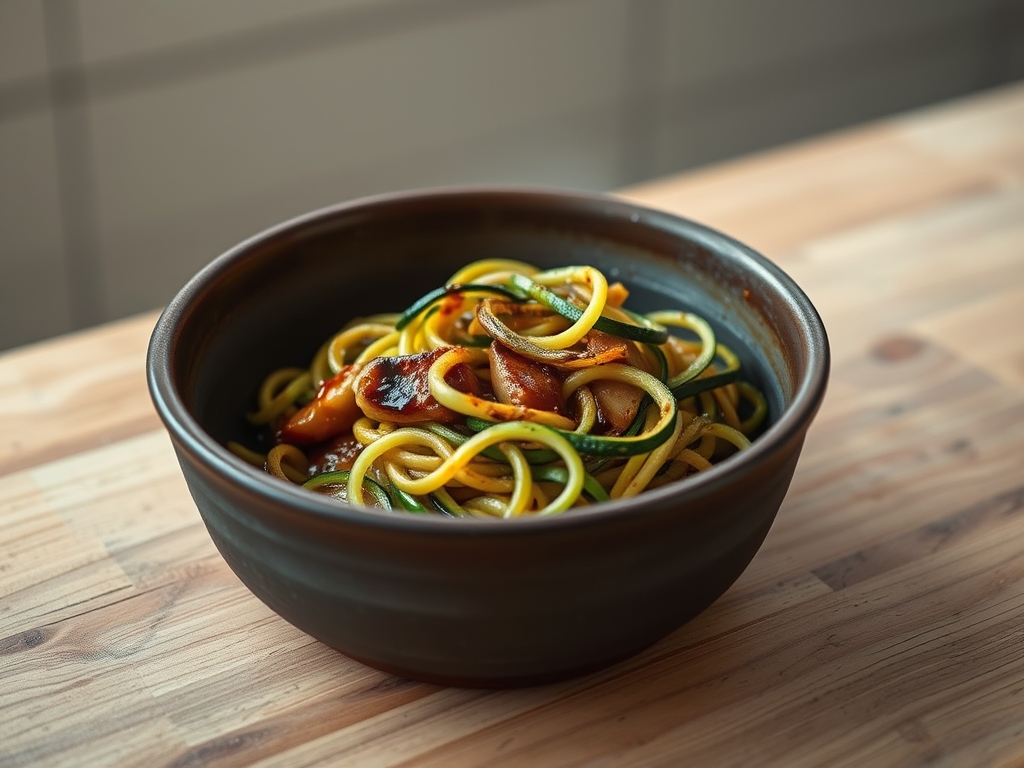
Imagine a world where the humble garden vegetable transcends its linear limitations to become a masterpiece of structural engineering. We are not just slicing; we are reconfiguring the very architecture of the cucurbit family. When you engage with a Spiralized Cucumber, you are witnessing the intersection of tension and geometry. The snap of the skin gives way to a cellular matrix brimming with hydration, while the spiral form increases surface area exponentially. This is not merely a salad component; it is a delivery system for flavor. Every ribbon and coil acts as a reservoir for piquant dressings and emulsified oils. As the blade engages the green exterior, the release of volatile aromatic compounds fills the air with a crisp, ozonic perfume that signals absolute freshness. We are building a dish that relies on the integrity of its hydro-static pressure. If the cucumber is flaccid, the structure fails. If the cut is uneven, the aesthetic collapses. We demand perfection in every helical turn because, in the world of high-end culinary infrastructure, the spiral is king.
THE DATA MATRIX
| Metric | Specification |
|---|---|
| Prep Time | 10 Minutes |
| Execution Time | 5 Minutes |
| Yield | 2 Servings |
| Complexity (1-10) | 3 |
| Estimated Cost per Serving | $1.25 |
THE GATHERS
Ingredient Protocol:
- 2 Large English Cucumbers (approx. 600g / 1.3 lbs)
- 30ml / 2 tbsp Toasted Sesame Oil
- 15ml / 1 tbsp Rice Vinegar
- 5ml / 1 tsp Honey or Agave
- 2g / 0.5 tsp Red Pepper Flakes
- 1g / 0.25 tsp Flaky Sea Salt
- 5g / 1 tsp Toasted Sesame Seeds
- 15ml / 1 tbsp Fresh Lime Juice
Section A: Ingredient Quality Audit:
The primary failure point in this assembly is the turgor pressure of the raw material. If your cucumber feels "rubbery" or yields too easily to thumb pressure, the internal cell walls have begun to collapse. To fix this, submerge the whole vegetable in an ice-water bath for thirty minutes prior to processing. This forces water back into the vacuoles, restoring the crispness required for a clean cut. Furthermore, avoid standard "slicing" cucumbers with thick, waxy skins and large seeds. These seeds create structural "voids" in your spirals, leading to breakage. Always opt for seedless English or Persian varieties to ensure a continuous, unbroken ribbon. If your sesame oil lacks a deep, nutty aroma, it has likely oxidized. Always store oils in a cool, dark place to prevent the rancidification of delicate lipids.
THE MASTERCLASS
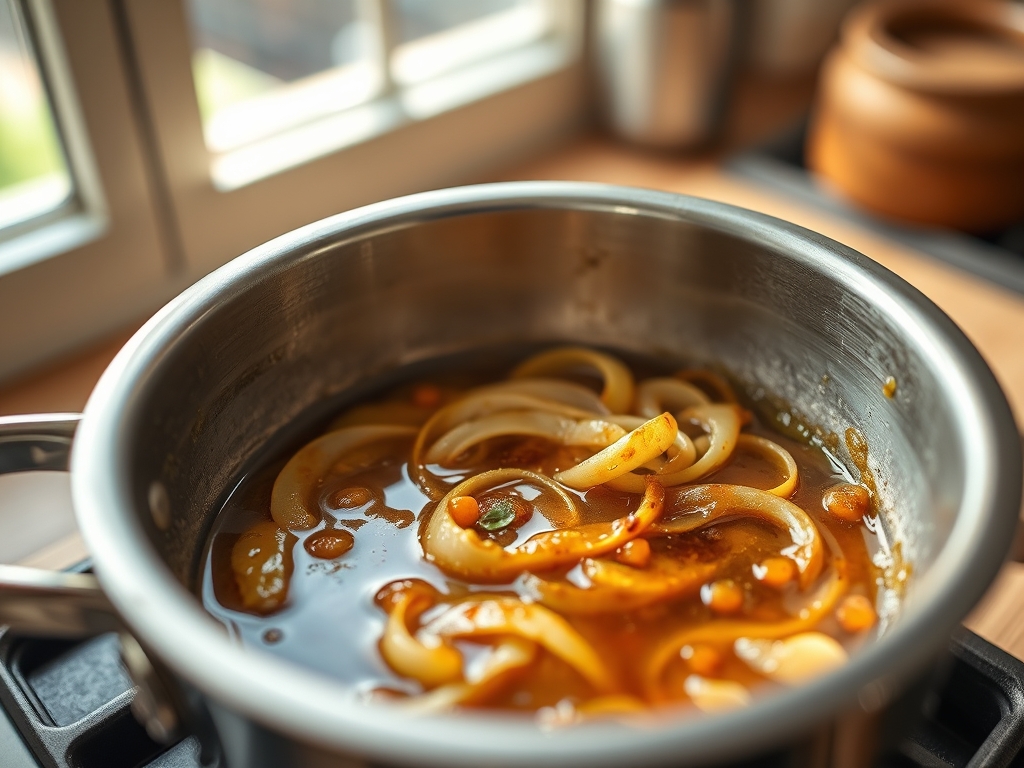
1. Structural Alignment and Trimming
Before the blade touches the flesh, you must establish a stable base. Use a bench scraper to clear your workstation and a sharp chef knife to remove the terminal ends of the cucumber. Ensuring the ends are perfectly flat allows for maximum suction and stability when the vegetable is mounted onto the spiralizer spindle.
Pro Tip: Use a digital scale to weigh your cucumbers before and after trimming. This helps you calculate the exact ratio of dressing needed to avoid drowning the delicate fibers. Precise ratios prevent the salt from drawing out too much moisture too quickly, which can turn your masterpiece into a soup.
2. The Helical Extraction
Mount the cucumber onto the spiralizer, centering it perfectly on the coring blade. Apply consistent, lateral pressure while rotating the crank at a steady tempo. The goal is a continuous "noodle" that maintains its structural integrity without snapping under its own weight.
Pro Tip: The physics of the spiralizer relies on the sharpness of the stainless steel blades. If the ribbons appear "shaggy" or torn, your blades are dull. Professional chefs often use a small ceramic honing rod to touch up these specialized edges, ensuring a clean shear that minimizes cellular damage and prevents premature weeping of juices.
3. Emulsification of the Dressing
In a small stainless steel saucier or mixing bowl, combine the sesame oil, vinegar, honey, and lime juice. Whisk vigorously to infuse the ingredients into a temporary emulsion. The honey acts as a stabilizer, helping the oil and acid stay bonded long enough to coat the cucumber ribbons evenly.
Pro Tip: Use a microplane to zest the lime directly into the dressing. The essential oils found in the zest provide a brighter, more viscous flavor profile than the juice alone. This creates a sensory layer that cuts through the richness of the toasted sesame oil.
4. Controlled Integration
Transfer the Spiralized Cucumber to a chilled glass bowl. Drizzle the dressing over the top and use kitchen tongs to gently toss the ribbons. Do not over-work the greens; excessive handling will bruise the cells and lead to a loss of that signature "crunch."
Pro Tip: Timing is everything in the world of cucurbits. Salt triggers osmosis immediately. To maintain the hydro-static integrity of the dish, do not add the salt or dressing until the exact moment of service. This prevents the ribbons from becoming limp and ensures the dressing remains a coating rather than a brine.
Section B: Prep & Timing Fault-Lines:
The most common human error is the "pre-salt" disaster. If you dress this dish twenty minutes before serving, you will return to a bowl of water and wilted greens. The molecular structure of the cucumber is over 95 percent water. Once salt is introduced, the osmotic pressure shifts, pulling liquid out of the cells. If you are prepping for a crowd, keep the spiralized ribbons in a sealed container with a damp paper towel and whisk the dressing in a separate vessel. Combine only when the guests are seated. Temperature control is also vital; a warm cucumber is a sad cucumber. Chill your serving bowls in the freezer for ten minutes to maintain the vegetable's crispness during consumption.
THE VISUAL SPECTRUM
Section C: Thermal & Visual Troubleshooting:
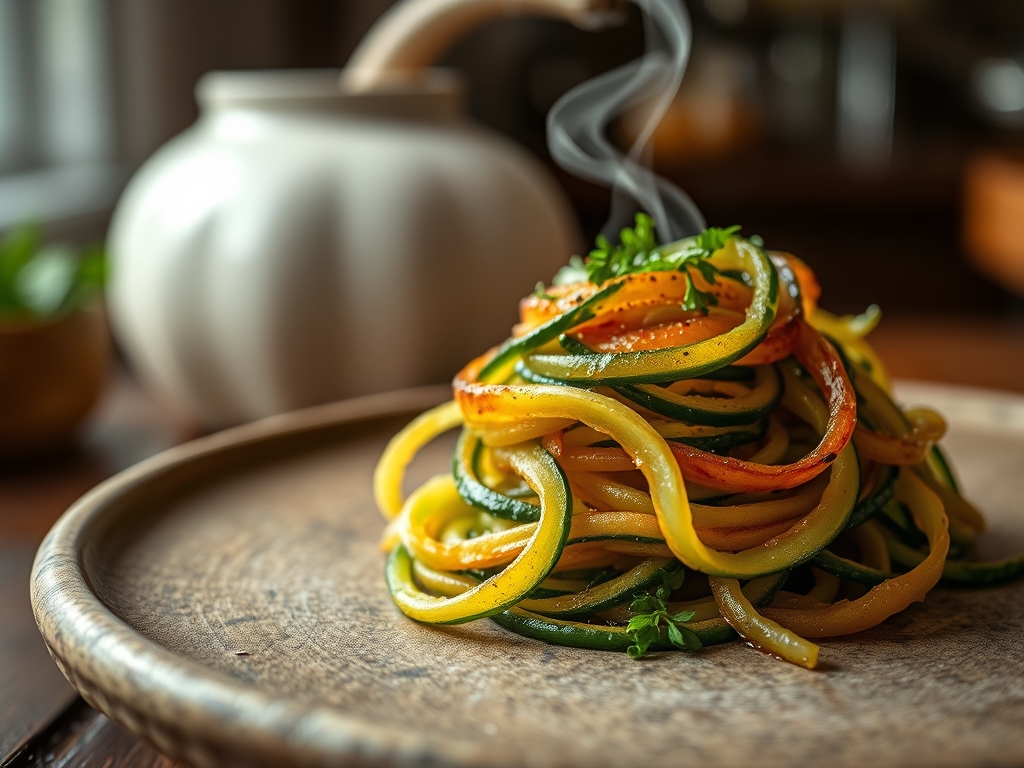
Look closely at the reference image. Notice the vibrant, translucent green of the flesh contrasted against the deep emerald of the skin. If your spirals look dull or "grayish," you have likely used an acidic dressing that has sat too long, causing the chlorophyll to break down. To maintain that neon-bright pop, add the lime juice at the very last second. If you see uneven browning on your sesame seeds, it means they were toasted in a pan that was too hot; they should be a uniform golden hue. The ribbons in the photo are "lofty" and aerated. If your plate looks flat and heavy, you have too much liquid at the bottom. Use a slotted spoon to plate the cucumber, then drizzle a measured amount of the residual dressing over the top to achieve that professional, high-volume architecture.
THE DEEP DIVE
Macro Nutrition Profile:
A standard serving of Spiralized Cucumber is incredibly nutrient-dense while remaining low in caloric load. You are looking at approximately 120 calories, primarily derived from the healthy fats in the sesame oil. It provides a significant dose of Vitamin K and Vitamin C, along with potassium to support electrolyte balance.
Dietary Swaps:
- Vegan: This recipe is inherently vegan as long as you use agave or maple syrup instead of honey.
- Keto: Replace the honey with a drop of liquid stevia or monk fruit to keep the glycemic index near zero.
- Gluten-Free: This dish is naturally GF, but always verify that your rice vinegar has not been cross-contaminated during processing.
Meal Prep & Reheating Science:
Do not attempt to reheat this dish. Heat will destroy the cellular structure, resulting in a mushy texture. For meal prep, store the spiralized cucumbers in a "dry" state. Use a salad spinner to remove every drop of surface moisture before storage. This prevents the growth of spoilage bacteria and keeps the fibers taut for up to 48 hours.
THE KITCHEN TABLE
How do I stop the cucumber noodles from being too long?
Simply take a pair of kitchen shears and snip the spiralized mass every six inches. This makes the dish much easier to manage with a fork and prevents a messy eating experience for your guests.
Can I use a mandoline instead of a spiralizer?
A mandoline will create flat ribbons (carpaccio style) rather than helical coils. While the flavor remains the same, you lose the structural "loft" and the specific mouthfeel that defines a true spiralized dish.
Why is there so much water at the bottom of my bowl?
This is the result of osmosis. Salt and acid draw moisture out of the cucumber. To minimize this, pat the cucumbers dry after spiralizing and always dress the salad immediately before it is consumed.
What is the best way to toast sesame seeds?
Place them in a dry saucier over medium heat. Shake the pan constantly to ensure even heat distribution. As soon as they become fragrant and turn golden, remove them from the pan to stop the cooking process.