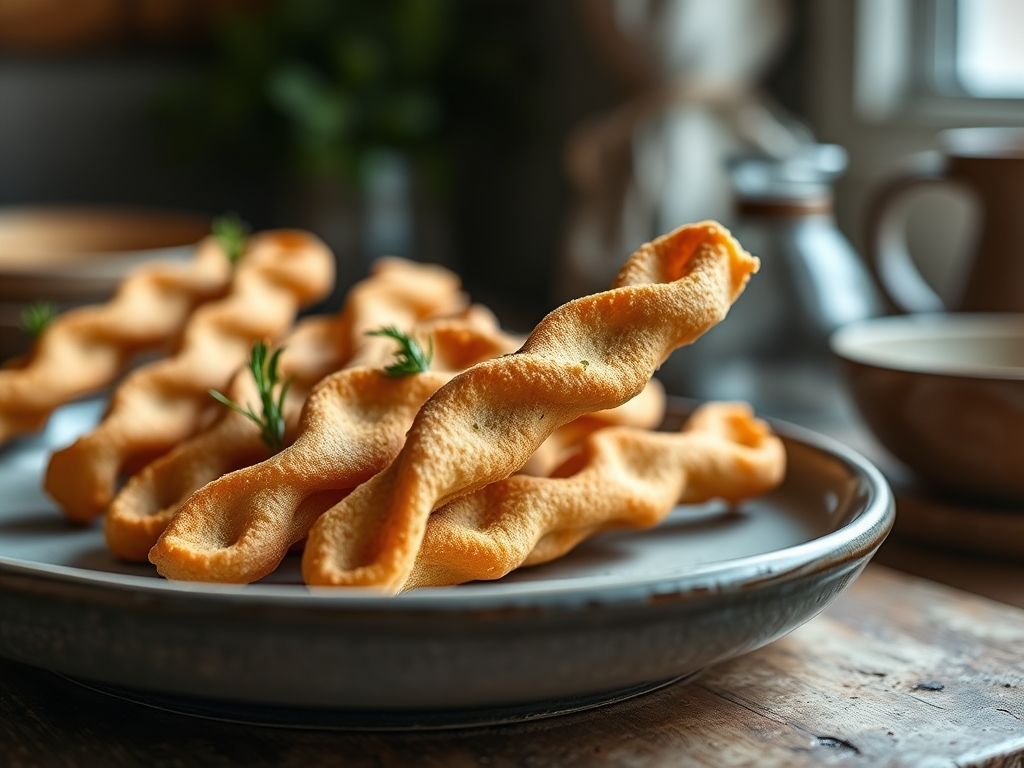
Listen closely because we are about to re-engineer the very concept of the tea biscuit. We are not merely baking; we are conducting a high-stakes audit of lipid distribution and structural integrity. The Curly Shortbread Twists represent the pinnacle of short-crust engineering. Imagine a texture so fragile it shatters upon dental impact, yet so rich in butterfat that it coats the palate in a luxurious, velvet sheen. This is the result of a precise ratio of flour to fat, manipulated through mechanical aeration to create a crumb that defies the laws of physics. We are looking for a golden-hued spiral that captures the light and holds it hostage. Forget those flabby, store-bought discs of sadness. We are here to execute a masterpiece of crunch and melt. Every twist is a calculated maneuver in dough tension. Every degree of temperature in your oven is a variable we will control with surgical precision. Strap in and calibrate your scales; the audit of the ultimate butter cookie begins now.
THE DATA MATRIX
| Metric | Specification |
|---|---|
| Prep Time | 25 Minutes |
| Execution Time | 15 Minutes |
| Yield | 24 Units |
| Complexity (1-10) | 6 |
| Estimated Cost per Serving | $0.45 |
THE GATHERS
Ingredient Protocol:
- 225g / 1 cup Unsalted European-style Butter (softened to 18 degrees Celsius)
- 100g / 0.5 cup Superfine Caster Sugar
- 1 Large Egg Yolk (room temperature)
- 5ml / 1 tsp Pure Madagascar Vanilla Bean Paste
- 300g / 2.5 cups All-Purpose Flour (sifted)
- 2g / 0.25 tsp Fine Sea Salt
- 30ml / 2 tbsp Whole Milk (if required for hydration adjustment)
Section A: Ingredient Quality Audit:
The primary failure point in Curly Shortbread Twists is the lipid source. If you utilize standard grocery store butter with high water content, your cookies will spread into a sad, oily puddle. Technical Fix: Source a butter with at least 82 percent butterfat. If your flour feels gritty, it likely has a high protein content meant for bread; this will result in a tough, rubbery cookie. To fix this, replace 10 percent of your flour weight with cornstarch to lower the gluten potential. Finally, ensure your sugar is superfine. Large granules will not dissolve during the creaming phase, leading to unsightly brown spotting on the surface of the final product.
THE MASTERCLASS
1. The Aeration Phase
Begin by placing your softened butter and caster sugar into the bowl of a stand mixer. Using the paddle attachment, cream the mixture on medium-high speed until the color shifts from yellow to a pale ivory. This process is not just about mixing; you are physically forcing air into the fat to create a stable foam.
Pro Tip: Use a digital thermometer to ensure your butter is exactly 18 degrees Celsius. If it is too warm, the air bubbles will collapse; if too cold, they will never form. This is the foundation of the cookie's "short" texture.
2. Emulsification Control
Add the egg yolk and vanilla bean paste to the creamed butter. Continue mixing at a low speed until the yolk is fully incorporated. The lecithin in the egg yolk acts as a natural emulsifier, binding the fat of the butter to the moisture in the vanilla and egg.
Pro Tip: Use a silicone spatula to scrape the bottom of the bowl frequently. Unmixed fat at the base of the bowl will create "hot spots" in your dough, leading to uneven baking and structural failure.
3. Dry Matter Integration
Turn the mixer to its lowest setting and gradually add the sifted flour and salt. Mix only until the white streaks of flour disappear. Overworking the dough at this stage will develop gluten, turning your delicate shortbread into a bread-like disaster.
Pro Tip: Use a bench scraper to fold the final remnants of flour by hand. This gives you tactile feedback on the dough's hydration levels and prevents over-mixing by the mechanical motor.
4. The Extrusion and Twist
Transfer the dough to a heavy-duty piping bag fitted with a large star tip. On a parchment-lined baking sheet, pipe 4-inch lengths of dough, then gently rotate the sheet or your wrist to create the signature Curly Shortbread Twists.
Pro Tip: If the dough is too stiff to pipe, add milk one teaspoon at a time. A digital scale is essential here to track exactly how much liquid you add, as even 5 grams can drastically alter the final spread of the cookie.
5. Thermal Setting
Place the piped cookies in a refrigerator for 30 minutes before baking. This chills the butter back to a solid state, ensuring the "twist" definition remains sharp during the initial blast of heat in the oven. Bake at 175 degrees Celsius (350 degrees Fahrenheit) for 12 to 15 minutes.
Pro Tip: Use a heavy-gauge aluminum baking sheet for even heat distribution. Thin pans warp in the heat, causing the cookies to slide and lose their geometric precision.
Section B: Prep & Timing Fault-Lines:
The most common human error is the "Warm Hand Syndrome." If you handle the piping bag for too long, the heat from your palms will melt the butter inside the bag. This results in a greasy dough that loses its shape. Technical Fix: Wear thin cotton gloves or wrap the piping bag in a cold, dry kitchen towel to insulate the dough from your body heat. Additionally, if your oven has not been preheated for at least 20 minutes, the initial "oven spring" will be insufficient to set the edges, causing the twists to blur into blobs.
THE VISUAL SPECTRUM
Section C: Thermal & Visual Troubleshooting:
Referencing the Masterclass photo, your Curly Shortbread Twists should exhibit a "matte-gold" finish with distinct, sharp ridges from the piping tip. If your ridges are melting into the body of the cookie, your dough was too warm or your oven temperature was too low. If the bottoms are dark brown while the tops are pale, your baking rack is too low in the oven; move it to the center position. A dull, greyish hue indicates old flour or oxidized butter. The perfect specimen will have a slight translucency at the very edges where the sugar has caramelized most intensely.
THE DEEP DIVE
Macro Nutrition Profile:
Each twist contains approximately 140 calories, 9g of fat, 14g of carbohydrates, and 1g of protein. The high lipid-to-carb ratio is what provides the signature mouthfeel.
Dietary Swaps:
- Vegan: Replace butter with a high-quality plant-based block (ensure it contains at least 75 percent fat) and use an aquafaba "flax egg" for binding.
- Keto: Utilize almond flour and an erythritol-based sweetener; note that the lack of gluten and sugar will result in a much more fragile structure.
- GF: A 1:1 gluten-free flour blend works well, but add 0.5 tsp of xanthan gum to mimic the "snap" of traditional wheat flour.
Meal Prep & Reheating Science:
To maintain the molecular structure, store these in an airtight glass container with a desiccant pack. If they lose their crispness, a 3-minute "flash bake" at 150 degrees Celsius will re-crystallize the sugars and evaporate any absorbed atmospheric moisture, restoring the original crunch.
THE KITCHEN TABLE
Why do my cookies spread so much?
This is usually caused by over-creaming the butter or using butter that is too soft. When the fat is too aerated or warm, it cannot support the flour's weight in the oven, leading to a structural collapse and excessive spreading.
Can I use granulated sugar instead of caster sugar?
Granulated sugar has larger crystals that do not dissolve easily in fat. This results in a grainy texture and "pockmarks" on the cookie surface. If you only have granulated sugar, pulse it in a blender for 30 seconds first.
Why are my twists tough instead of crumbly?
You have likely over-developed the gluten. This happens when the dough is mixed for too long after the flour is added. Once the flour hits the wet ingredients, you must be as gentle as possible to maintain a short crumb.
How do I get that perfect golden edge?
The golden color comes from the Maillard reaction. Ensure your oven is calibrated correctly using an external thermometer. A light dusting of extra caster sugar on top before baking can also help accelerate surface caramelization for a better visual.