Stop treating your appetizers like a secondary thought and start treating them like a structural engineering project. We are moving beyond the soggy, limp breadsticks of your past and entering the realm of high-performance laminated architecture. The objective is simple but the execution requires precision: Twisted Pestos Sticks. We are looking for a visceral crunch that resonates through the jawbone; a piquant explosion of basil and garlic that remains fused to the pastry rather than sliding off into the abyss of the baking sheet. This is about herb oil adhesion. We are leveraging the mechanical bond between the gluten network of the puff pastry and the viscous emulsion of a high-grade pesto. When that heat hits the oven floor, we want the steam to lift those layers into a flaky, golden skyscraper while the chlorophyll stays vibrant. If you are tired of appetizers that lack structural integrity and flavor density; you have arrived at the right audit. Let us dismantle the mediocre and rebuild the magnificent.
THE DATA MATRIX
| Metric | Specification |
|---|---|
| Prep Time | 20 Minutes |
| Execution Time | 15 Minutes |
| Yield | 24 Twisted Pestos Sticks |
| Complexity (1-10) | 4 |
| Estimated Cost per Serving | $0.85 |
THE GATHERS
Ingredient Protocol:
- 500g / 1 lb Pre-rolled All-Butter Puff Pastry (Chilled)
- 125ml / 0.5 cup High-Density Basil Pesto
- 60g / 0.5 cup Finely Grated Parmigiano-Reggiano
- 1 Large Egg (for protein-based wash)
- 15ml / 1 tbsp Whole Milk
- 5g / 1 tsp Coarse Sea Salt
- 2g / 0.5 tsp Freshly Cracked Black Pepper
- 30g / 0.25 cup Toasted Pine Nuts (Finely crushed)
Section A: Ingredient Quality Audit:
The primary failure point in this assembly is the moisture content of the pesto. If your pesto is swimming in a pool of oil, the pastry will fail to laminate; it will fry in the fat instead of rising. To fix this, strain your pesto through a fine-mesh sieve for ten minutes to remove excess liquid. If your puff pastry uses vegetable shortening instead of butter, the flavor profile will be hollow. Always audit your labels for "All-Butter" to ensure the Maillard reaction produces that deep, nutty aroma. If the dough feels tacky or limp, it has exceeded the critical temperature threshold. Return it to the freezer for five minutes to stabilize the fat solids before proceeding with the structural cuts.
THE MASTERCLASS
1. Thermal Stabilization and Surface Prep
Lay your chilled puff pastry on a clean work surface. Use a digital scale to ensure your pesto weight is accurate; too much weight will collapse the delicate dough layers. Dust your surface lightly with flour to prevent sticking, but do not over-flour, as this creates a dry, sandy barrier that inhibits adhesion.
Pro Tip: Use a heavy marble rolling pin to maintain a cold surface temperature. This keeps the butter layers in a solid state, ensuring maximum steam expansion once the sticks hit the heat.
2. The Pesto Application and Laminate Bond
Spread the strained pesto across one half of the pastry sheet using an offset spatula. You want a thin, translucent layer. Sprinkle the crushed pine nuts and Parmigiano-Reggiano over the green film. Fold the naked half of the pastry over the coated half, creating a sandwich. Use a bench scraper to press the edges firmly, locking the internal components in place.
Pro Tip: The viscous nature of the cheese acts as a secondary adhesive. As the cheese melts, it binds the two layers of dough together, preventing the "twist" from unraveling during the thermal expansion phase.
3. Precision Longitudinal Sectioning
Using a sharp pizza wheel or a fluted pastry cutter, divide the dough into strips approximately 2cm wide. Speed is essential here; you want to maintain the structural integrity of the dough before the butter begins to render at room temperature.
Pro Tip: A chilled blade creates cleaner cuts. If the dough begins to drag or tear, place your cutting tool in the freezer for sixty seconds to reset the edge temperature.
4. The Rotational Torque (The Twist)
Pick up each strip and twist it three to four times in opposite directions. This creates a spiral staircase of flavor. Place each unit onto a baking sheet lined with a silicone mat or parchment paper. Ensure there is at least 3cm of clearance between each stick to allow for proper airflow and even browning.
Pro Tip: Secure the ends of each stick by pressing them firmly into the parchment. This mechanical anchor prevents the pastry from shrinking and losing its aesthetic spiral during the bake.
5. Protein Glaze and Final Seasoning
Whisk the egg and milk in a small saucier or bowl until fully aerated. Lightly brush the exposed pastry ridges with the wash. This provides the protein necessary for a high-gloss finish. Sprinkle with the coarse sea salt and cracked pepper.
Pro Tip: The egg wash acts as a varnish that traps moisture inside the pastry while allowing the exterior to crisp. This creates the contrast between a crunchy shell and a tender, infused interior.
Section B: Prep & Timing Fault-Lines:
The most common human error is the "Warm Dough Syndrome." If you spend too much time perfecting the twist, the butter melts and the dough becomes a sticky mess. If this happens, do not force the bake. Place the entire tray in the refrigerator for fifteen minutes to re-solidify the fats. Another timing error is the "Preheat Lie." Most ovens signal they are ready before the internal stone or walls have reached thermal equilibrium. Wait an extra ten minutes after the beep to ensure a consistent 200C / 400F environment.
THE VISUAL SPECTRUM
Section C: Thermal & Visual Troubleshooting:
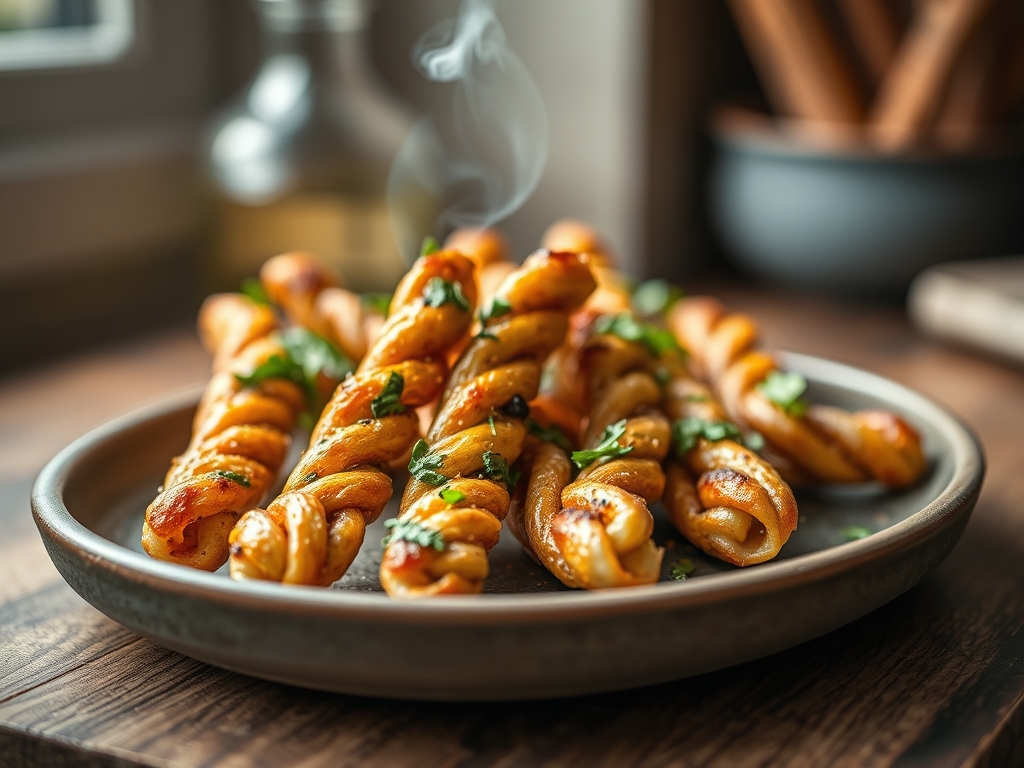
Referencing the Masterclass photo, your Twisted Pestos Sticks should exhibit a rhythmic pattern of vibrant green and deep mahogany. If your sticks look pale and ghostly, your oven temperature is too low; increase by 10 degrees. If the pesto has turned a muddy brown, you likely used a low-quality oil that oxidized too quickly. To maintain that electric green, ensure your pesto is fresh and high in basil content. If the twists have flattened into ribbons, you lacked "torque" during the shaping phase. Ensure you achieve at least three full rotations to maintain the 3D architecture shown in the visual reference.
THE DEEP DIVE
Macro Nutrition Profile:
Each stick provides approximately 120 calories, with 8g of fat, 10g of carbohydrates, and 2g of protein. The high fat content is primarily from the monounsaturated fats in olive oil and the saturated fats in the butter-based pastry.
Dietary Swaps:
- Vegan: Utilize a water-based puff pastry and substitute the egg wash with a light coating of aquafaba. Use a nutritional yeast-based pesto.
- Keto: This recipe is difficult to convert due to the reliance on wheat-based lamination; however, fat-head dough (mozzarella and almond flour) can be used as a structural substitute.
- GF: Use a high-quality gluten-free puff pastry; note that these often require more delicate handling as they lack the elastic gluten network.
Meal Prep & Reheating Science:
To maintain molecular structure, never microwave these sticks. The microwave agitates water molecules, turning the crisp pastry into a rubbery disaster. Instead, reheat in a 175C / 350F oven for five minutes to re-crisp the exterior and infuse the oils back into the crumb.
THE KITCHEN TABLE
Why is my pesto leaking out of the twists?
Your pesto likely has a high oil-to-solid ratio. Use a saucier to reduce any excess liquid or increase the amount of grated cheese to act as a binder that thickens the emulsion during the baking process.
Can I make these 24 hours in advance?
Yes. Construct the sticks, place them on the tray, and cover tightly with plastic wrap in the refrigerator. Do not apply the egg wash until immediately before they enter the oven to prevent the pastry from becoming soggy.
My pastry didn't puff. What happened?
The oven temperature was likely too low or the dough was handled too much, melting the butter layers. The steam needs a sudden burst of high heat to force the layers apart before the fat melts away.
What is the best cheese for adhesion?
Parmigiano-Reggiano or Pecorino Romano are ideal. Their low moisture content and high protein levels create a "glue" effect when heated; ensuring the pesto stays locked within the spiral architecture of the pastry.