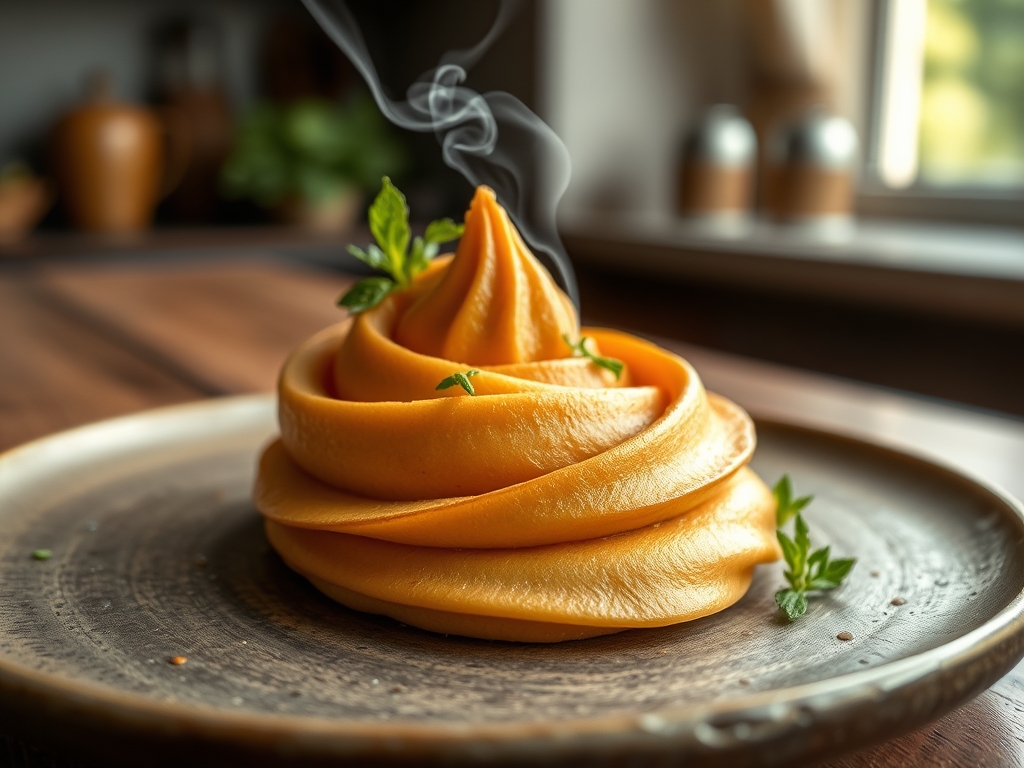
Listen closely because we are about to dissect the architecture of the ultimate confection. Forget the standard, flat-topped almond cookie you find in dusty patisserie windows. We are hunting for the Curly Macaron Swirl. This is a high-stakes structural engineering project disguised as a dessert. The goal is a delicate, ruffled perimeter that defies the traditional smooth shell; it is a visual riot of texture that demands perfect protein alignment. When you bite into it, the exterior must shatter like a thin sheet of ice, yielding to a center so viscous and lush it borders on the illicit. We are manipulating egg whites into a stable foam matrix, then folding in sugar and almond flour with the precision of a watchmaker. If your macaronage is off by even three folds, the structural integrity collapses. If your oven calibration is a mere five degrees shy of the target, the feet fail to rise. We are here to audit your technique and ensure your meringue reaches peak performance.
THE DATA MATRIX
| Metric | Specification |
|---|---|
| Prep Time | 45 Minutes |
| Execution Time | 18 Minutes |
| Yield | 24 Sandwiched Units |
| Complexity (1-10) | 9 |
| Estimated Cost per Serving | $0.85 |
THE GATHERS
Ingredient Protocol:
- Aged Egg Whites: 100g / approx. 3 large whites
- Superfine Granulated Sugar: 50g / 1/4 cup
- Extra-Fine Almond Flour: 110g / 1 cup
- Confectioners Sugar: 200g / 1.75 cups
- Cream of Tartar: 1g / 1/4 teaspoon
- Gel Food Coloring: 2ml / 1/2 teaspoon
- Vanilla Bean Paste: 5ml / 1 teaspoon
Section A: Ingredient Quality Audit:
Sub-par raw materials are the primary cause of structural failure in the Curly Macaron Swirl. If your almond flour feels oily or clumped, it has likely begun to oxidize; this excess fat will deflate your meringue. The fix is to toast the flour at a low temperature for five minutes and then pass it through a fine-mesh sieve twice. If your egg whites are fresh from the fridge, the protein bonds are too tight to properly aerate. You must age them at room temperature for at least 24 hours or "flash-age" them by placing the bowl in warm water. Moisture is the enemy of the macaron. If your kitchen humidity exceeds 50 percent, use a dehumidifier or add 5g of egg white powder to the dry mix to reinforce the molecular scaffolding.
THE MASTERCLASS
1. Sifting and Dry Integration
Begin by combining your almond flour and confectioners sugar. Use a digital scale for this; volume measurements are for amateurs and will lead to catastrophic density shifts. Sift the mixture three times through a fine sieve to ensure a powder-fine consistency.
Pro Tip: Use a bench scraper to push the final stubborn granules through the mesh. The science here involves maximizing surface area to ensure the sugar absorbs the moisture from the egg whites instantly, preventing clumps that cause "volcano" venting during baking.
2. Achieving the Stiff Peak Meringue
Place your aged egg whites and cream of tartar in a spotless stainless steel bowl. Begin whisking on low speed until small bubbles form, then gradually rain in the granulated sugar. Increase speed to medium-high until the meringue forms sharp, upright peaks that do not droop when the whisk is lifted.
Pro Tip: Use a digital thermometer to ensure your whites are exactly 20 degrees Celsius. Cold whites are more stable but take longer to aerate; warmer whites expand faster but risk over-beating. We need the sweet spot for maximum protein elasticity.
3. The Macaronage and Swirl Technique
Fold the dry ingredients into the meringue using a silicone spatula. Use a "cut and fold" motion. Once the batter reaches a lava-like consistency, transfer it to a piping bag fitted with a specialized star tip to create the Curly Macaron Swirl. Pipe in a tight, upward spiral motion.
Pro Tip: This is where you render the batter into a flowable state. The goal is to partially deflate the air bubbles so the batter flows, but not so much that it loses the shape of the star tip. A saucier or small offset spatula can help smooth any jagged edges if the batter is too stiff.
4. The Rest and Dehydration Phase
Allow the piped shells to sit at room temperature for 30 to 60 minutes. They must develop a matte "skin" that is dry to the touch. This skin forces the air to escape through the bottom, creating the iconic ruffled "feet" or "pied."
Pro Tip: If the skin does not form, your kitchen is too humid. Use a hair dryer on a cool, low setting to infuse the surface with dry air. Without this skin, the steam will burst through the top, shattering your beautiful spiral.
5. Thermal Execution and Maturation
Bake at 150 degrees Celsius for 18 minutes. Once cooled, fill with a high-fat buttercream or ganache. Store the assembled macarons in the refrigerator for 24 hours before consuming.
Pro Tip: This 24-hour wait is known as maturation. The moisture from the filling migrates into the shell, creating that signature "melt-in-the-mouth" texture. Use an oven thermometer to verify your internal temp; most home ovens are liars.
Section B: Prep & Timing Fault-Lines:
Timing is the difference between a masterpiece and a tray of sugar-flavored crackers. If you over-beat the meringue in step two, the proteins will become brittle and "weep," leading to a hollow shell. If you under-fold the batter in step three, the Curly Macaron Swirl will be too lumpy and won't develop a smooth base. The most common human error is impatience during the drying phase. If you bake before the skin is set, the shells will crack. Always use a timer and a hygrometer to monitor your environment.
THE VISUAL SPECTRUM
Section C: Thermal & Visual Troubleshooting:
Examine the Masterclass photo. Note the vibrant, consistent color and the distinct, sharp ridges of the spiral. If your colors look dull or "toasted," your oven is too hot, causing the sugar to caramelize prematurely. To fix this, place an empty baking sheet on the top rack to act as a heat shield. If the ridges of your Curly Macaron Swirl have melted into a smooth mound, your batter was over-mixed, destroying the structural tension required to hold the shape. If the shells are lopsided, your piping technique was uneven or your baking sheet is warped. Use a heavy-duty, professional-grade aluminum pan to ensure even heat distribution.
THE DEEP DIVE
Macro Nutrition Profile:
Each macaron contains approximately 90 calories, 4g of fat, 12g of carbohydrates, and 2g of protein. While sugar-dense, the almond flour provides a modest hit of Vitamin E and magnesium.
Dietary Swaps:
For a vegan version, replace egg whites with aquafaba (chickpea brine) reduced by half. For a keto-friendly variant, use erythritol and increase the almond flour ratio, though the "feet" will be less pronounced due to the lack of traditional sugar crystallization. All macarons are naturally gluten-free.
Meal Prep & Reheating Science:
Macarons are the ultimate make-ahead dessert. They freeze beautifully for up to three months. To maintain the molecular structure, thaw them in the refrigerator, never at room temperature, to prevent condensation from softening the shell. Do not reheat; these are designed to be consumed at a cool room temperature to allow the fats in the filling to soften slightly.
THE KITCHEN TABLE
Why are my macaron shells hollow?
This usually indicates the meringue was over-whisked or the oven temperature was too low. The internal structure collapsed before it could set, leaving an air pocket. Ensure your peaks are stiff but still glossy, not dry or chunky.
Can I use liquid food coloring?
Absolutely not. Liquid coloring adds unnecessary moisture which destabilizes the protein matrix. Always use highly concentrated gel or powder colors to maintain the precise hydration levels required for the Curly Macaron Swirl.
How do I get perfectly round shapes?
Print a template with circles and place it under your parchment paper. Follow the guide as you pipe your spirals. Remember to remove the template before sliding the tray into the oven to avoid a fire hazard.
Why did my macarons stick to the paper?
They are likely underbaked. If the centers are still wet, they will bond to the parchment. Try baking for two additional minutes. Alternatively, ensure you are using high-quality silpat mats or professional-grade greaseproof paper.